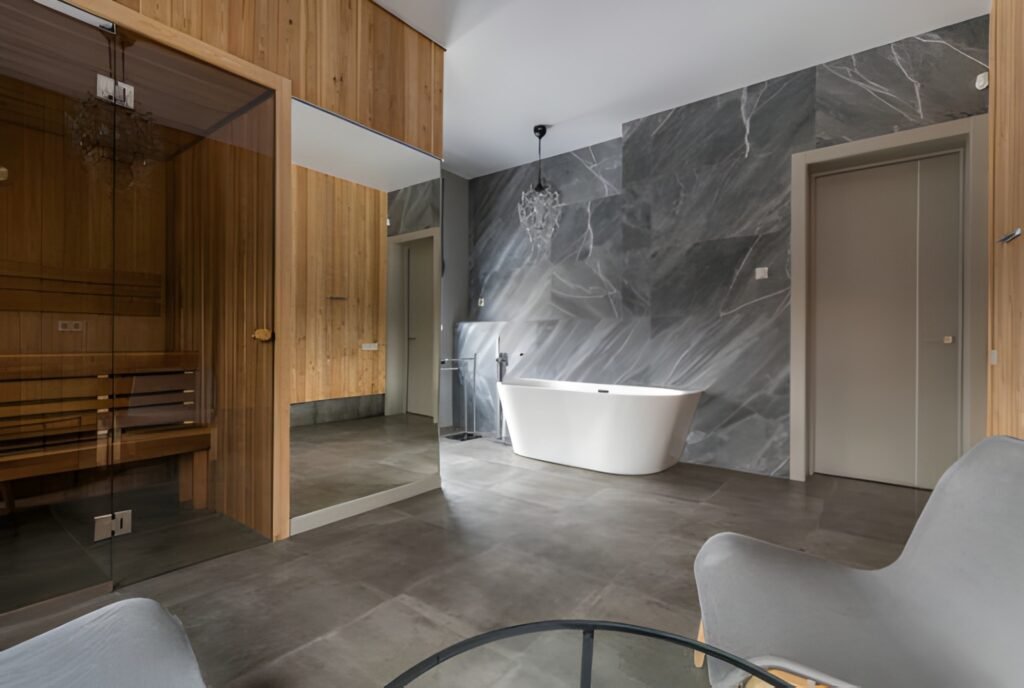
A sauna bathroom renovation represents the fusion of utilitarian function and profound wellness. It is a project that transcends conventional bathroom design, demanding a unique understanding of thermal dynamics, material science, and the creation of a multi-sensory experience. This is not merely an installation; it is the architectural crafting of a personal thermic sanctuary within the home—a space dedicated to heat, stillness, and purification. The process requires meticulous planning, from selecting the right type of sauna to executing a build that is as safe and efficient as it is beautiful.
The Foundational Choice: Sauna Type and Heat Source
The first and most critical decision is the selection of the sauna itself, which dictates the project’s scope, cost, and technical requirements.
- Traditional Finnish Sauna: This is the authentic experience, using a dedicated sauna heater (kiuas) filled with thermal mass stones. Water is ladled onto the stones to produce löyly, the burst of humid steam that is central to the ritual. These can be electric, wood-burning, or gas-fired, with electric being the most common for indoor installations. This option requires the most space and a significant power supply (often a dedicated 240V/40-60A circuit).
- Infrared Sauna: These use ceramic or carbon-fiber panels to emit infrared light, which directly heats the body’s surface rather than the air. They operate at a lower temperature (45-60°C vs. 70-100°C), use less energy (a standard 120V/15A outlet often suffices), and preheat in minutes rather than 30-45 minutes. However, they do not produce the classic steam experience.
- Pre-Fabricated vs. Custom-Built: A pre-fab kit is quicker to install and can be more cost-effective. A custom-built sauna, lined with traditional tongue-and-groove timber, offers superior insulation, a more authentic aesthetic, and can be tailored to fit an awkward space perfectly.
The Architectural and Technical Demands
Integrating a sauna, particularly a traditional one, into a bathroom is a significant architectural intervention that demands careful planning.
- The Envelope: Insulation and Vapour Control: A traditional sauna is a high-humidity environment that must be completely isolated from the rest of the home’s structure. The wall, ceiling, and floor assembly must include:
- A vapour-proof barrier behind the interior cladding.
- High-performance, foil-faced insulation to reflect radiant heat back into the room.
- An air gap to allow the insulation to function effectively.
Failure to create this sealed envelope will lead to heat loss, condensation within the walls, and potential structural damage.
- The Material Palette: Function and Aesthetics: Every material inside the sauna must be chosen for its reaction to extreme heat and humidity.
- Interior Cladding: Only certain woods are suitable. Western Red Cedar and Nordic Spruce are the gold standards—they are low-density, have minimal resin, and do not conduct heat aggressively, preventing burns. They also impart a distinctive, calming aroma.
- Benching: Must be constructed from the same thermically inert softwoods. Benches are typically tiered, with a significant temperature gradient from floor to ceiling.
- Flooring: Outside the sauna cabin itself, the bathroom floor must be non-slip and waterproof. Large-format porcelain tiles are ideal. Inside the sauna, a duckboard floor (slatted timber) over a waterproof membrane is common, allowing water to drain and feet to stay cool.
- The Mechanical Systems: Power and Ventilation:
- Electrical Requirements: A traditional electric sauna heater demands a heavy-duty, dedicated circuit. The cost and complexity of running this cable from the consumer unit must be factored in. All lighting inside the sauna must be IP68-rated and specifically designed for high-temperature environments.
- Ventilation: This is a safety and comfort necessity. A traditional sauna requires both an intake vent (typically near the heater) and an exhaust vent (on the opposite wall, near the floor) to ensure a continuous supply of fresh air and to prevent stale air or carbon dioxide buildup.
The Bathroom Integration: Creating a Cohesive Wellness Circuit
The sauna should not feel like an appliance plopped into a bathroom; it should be the anchor of a holistic wellness zone.
- The Cooling-Down Station: The experience of the sauna is defined by the cycle of heating and cooling. The bathroom layout must facilitate this. A dedicated walk-in shower, preferably with a large, ceiling-mounted rainfall head, is essential for a cooling rinse. A bench or niche for towels and a fillable water bucket (for a traditional sauna) should be within easy reach.
- The Ambiance: The lighting for the entire bathroom should be dimmable. The inclusion of natural materials like stone, slate, or wood in the bathroom’s finish helps the sauna feel integrated rather than突兀. A built-in sound system for calming music can enhance the sensory journey.
- Practical Considerations: The bathroom will generate significant steam and humidity. A commercial-grade extractor fan is mandatory to protect the rest of the home from moisture damage. All other bathroom finishes must be chosen for their moisture resistance.
The Financial and Spatial Investment
A sauna bathroom renovation is a premium project. A pre-fabricated infrared cabin might start around £3,000, plus installation. A custom-built traditional Finnish sauna, with all the necessary electrical, ventilation, and tiling work, can easily range from £10,000 to £25,000 or more, depending on size and finishes.
The spatial requirement is also significant. A comfortable traditional sauna for two people requires a minimum footprint of about 1.2m x 1.8m, plus clearance around the heater and space for the changing/cooling-down area.
A successfully executed sauna bathroom renovation creates more than a room; it creates a ritual. It is a deeply personal retreat that offers a tangible escape from the modern world, providing documented benefits for cardiovascular health, muscle recovery, and mental well-being. It is the ultimate statement in designing a home for holistic health, a sanctuary where heat, steam, and quiet contemplation wash away the stress of the day.