The decision to renovate a UK property is a significant one, driven by a blend of personal desire and financial pragmatism. Whether you aim to create your perfect forever home or strategically position a property for a profitable sale, the central challenge remains the same: how to allocate a finite budget for maximum impact. The UK housing market, with its unique character, ageing stock, and specific buyer sensitivities, demands a tailored approach. True cost-effectiveness is not about finding the cheapest options; it is about identifying which improvements deliver the greatest return on investment, enhance liveability, and future-proof your asset against market shifts.
This guide moves beyond generic advice to explore the strategic, financial, and practical considerations of renovating a UK home. We will examine which projects yield the best returns, how to budget effectively, and how to navigate the complexities of the planning system and building regulations that govern property improvement across England, Wales, Scotland, and Northern Ireland.
The Foundation: Understanding Value and Return on Investment (ROI)
Before you lift a hammer, you must adopt the mindset of an investor. Every decision should be measured against its potential return. The concept of Return on Investment (ROI) provides a clear financial framework for this.
The basic formula for calculating the ROI on a renovation project is:
\text{ROI} = \frac{\text{Value Added to Property} - \text{Cost of Renovation}}{\text{Cost of Renovation}} \times 100This calculation gives you a percentage that represents the profit (or loss) on your renovation spend relative to the cost.
Example Calculation:
Imagine you spend £15,000 on a new kitchen. A qualified valuer or estate agent indicates that this improvement will add £20,000 to your property’s market value. Your ROI would be:
This is a healthy return. However, if the same kitchen only added £12,000 in value, the ROI would be negative:
\text{ROI} = \frac{\text{\£12,000} - \text{\£15,000}}{\text{\£15,000}} \times 100 = -20\%This simple maths underscores the importance of choosing projects wisely. It is also crucial to understand the concept of ceiling value—the maximum value a property can achieve in its immediate location. No matter how much you spend, you cannot significantly exceed the price of similar, recently sold homes on your street. Over-improving a property for its area is a common and costly mistake.
High-Impact, Low-Cost Interior Renovations
The interior of a home is where buyers and inhabitants form an emotional connection. Small, intelligent changes here often yield the most significant returns.
1. Redecoration: The Unbeatable Value Champion
A fresh, neutral coat of paint throughout a property is the single most cost-effective improvement you can make. It costs little but transforms the feel of a space, making it appear brighter, larger, and well-maintained. The key is to choose modern, neutral tones like light greys, warm whites, and earthy beiges. These colours act as a blank canvas, allowing potential buyers to project their own lives onto the space. Dark or highly personalised colour schemes have the opposite effect, making rooms feel smaller and dated.
- Estimated Cost: £300 – £1,500 for a full 3-bedroom house (DIY). £2,000 – £5,000+ if hiring professionals.
- Estimated Value Add: Difficult to quantify separately, but a poorly presented house can sell for 5-10% less than an equivalent well-presented one. This project is about preventing value loss rather than adding it directly.
2. Kitchen and Bathroom Refreshes, Not Full Replacements
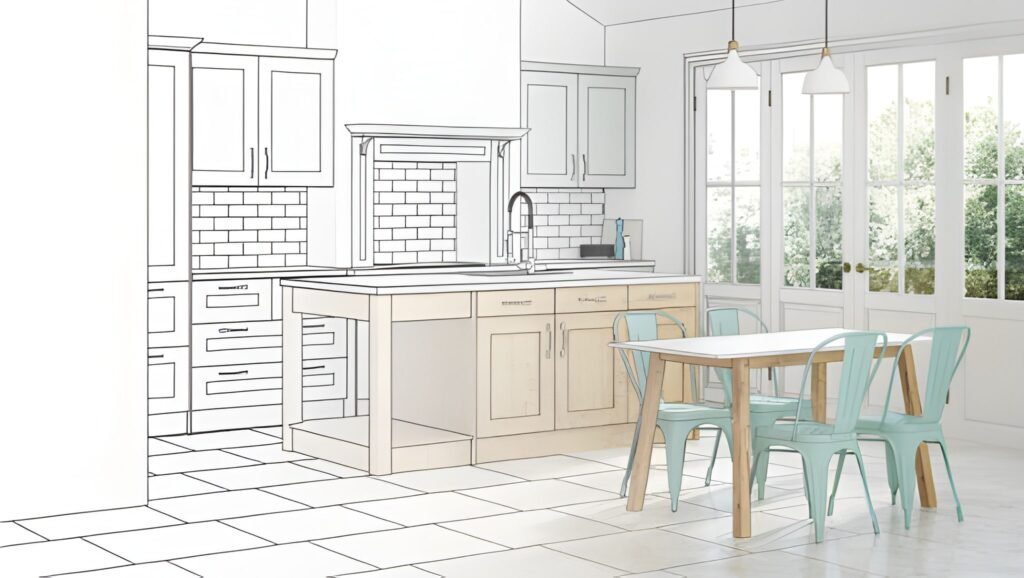
A full kitchen or bathroom remodel is one of the most expensive projects, with a new kitchen easily costing £8,000 – £25,000+. For cost-effectiveness, consider a strategic refresh instead.
- For Kitchens: Replace only the cabinet doors and drawer fronts, keeping the existing carcasses if they are structurally sound. Update handles and taps to modern, brushed brass or matte black finishes. Consider professional resurfacing of worktops rather than replacement. A new sink and a stylish, energy-efficient tap can make a surprising difference.
- For Bathrooms: Re-grouting and re-sealing tiles is essential. Replacing an old, discoloured toilet seat, a rusty radiator, and a dated vanity unit can modernise the room for a few hundred pounds. Consider paneling over old tiles with modern PVC or acrylic sheets designed for this purpose.
- Estimated Cost (Refresh): £1,000 – £5,000
- Estimated ROI: A full kitchen remodel might see an ROI of 50-80%, but a clever refresh can achieve a similar perceived effect for a fraction of the cost, pushing its ROI much higher.
3. Lighting and Electrics
Dark, poorly lit rooms feel small and uninviting. Improve lighting by:
- Ensuring each room has a good mix of ambient, task, and accent lighting.
- Replacing old fixtures with modern, clean-lined designs.
- Adding LED spotlights in kitchens and bathrooms.
- Installing dimmer switches to create ambiance.
Furthermore, ensuring the consumer unit (fuse box) is modern and that the property has sufficient sockets for modern life (USB sockets are a cheap, valuable add-on) signals a well-cared-for home.
4. Flooring
Replacing worn-out carpets or damaged laminate flooring has a dramatic effect. For cost-effectiveness, consider high-quality laminate or luxury vinyl tile (LVT) which offer the appearance of wood or stone at a lower cost and with better durability. Ensure consistent flooring flows through ground-floor rooms to create a sense of space.
Strategic Structural and Exterior Improvements
The exterior of your property is the first thing anyone sees. Investing here not only improves aesthetics but also addresses fundamental issues that can scare off buyers during a survey.
5. The Front Door and Kerb Appeal
Your front door is the centrepiece of your home’s facade. Replacing a tired, draughty door with a modern, secure, and well-insulated one instantly elevates the property’s entire appearance. If a new door is too expensive, a thorough sanding and a fresh coat of a bold, contemporary colour (e.g., navy blue, forest green, charcoal grey) can achieve a similar effect for less. Complement this with clean house numbers, a new letterbox, and some simple, symmetrical planting.
- Estimated Cost: £150 (DIY repaint) to £2,000+ (new composite door fitted).
- Estimated Value Add: High perceived value. Can significantly improve first impressions.
6. Garden Makeovers
UK buyers place a high value on outdoor space, especially post-pandemic. You do not need to install expensive decking or water features. Cost-effective garden improvements include:
- Lawn Care: Seeding bald patches, regular mowing, and edging.
- Defined Spaces: Creating a clear patio or seating area with some simple gravel or pavers.
- Planting: Low-maintenance, evergreen shrubs and perennial plants. A few pots filled with seasonal flowers by the door add a welcoming touch.
- Cleanliness: Pressure washing patios, fences, and pathways. Ensuring sheds and outbuildings are tidy.
7. Loft Insulation and Draught-Proofing
With energy costs a major concern for UK households, improving a property’s efficiency is a powerful selling point. Loft insulation is one of the cheapest and most effective measures. The recommended depth is now 270-300mm. Combined with professional draught-proofing of windows, doors, and floorboards, this can drastically reduce heating bills and make the home feel more comfortable.
- Estimated Cost: £400 – £1,200 (may be eligible for government grants or energy company obligations).
- Estimated Value Add: While difficult to pin down, energy performance certificate (EPC) ratings are increasingly influencing buyer decisions and mortgage affordability. Moving from an E to a C rating is a tangible benefit.
Navigating Planning and Regulations
A cost-effective renovation is a compliant one. Unexpected costs arise from failing to secure the correct permissions.
- Permitted Development (PD): Many home improvements, like small extensions, loft conversions, and outbuildings, can be done without full planning permission under PD rights. However, these rights are complex and vary by location (they are more restricted in Conservation Areas and National Parks). Always check with your local authority’s planning department before starting work.
- Building Regulations: This is separate from planning permission. Building Regulations ensure that work is structurally sound, safe, and energy-efficient. Most structural work (removing walls, extensions, new windows), electrical work, and plumbing changes require Building Control approval. Failing to get this can lead to enforcement action and will cause severe problems when you try to sell the property, as your solicitor will be unable to provide proof of compliance.
The Budget: Planning for the Inevitable
A meticulous budget is your best defence against overspending. The rule of thumb is to add a contingency of 10-20% of the total project cost for unexpected issues. In older UK properties, it is wise to lean towards 20%. You will inevitably find hidden problems—damp, rotten timber, outdated wiring—once you start opening up walls and floors.
Table 1: Simplified Renovation Budget Template
| Item | Estimated Cost | Actual Cost | Contingency (15%) | Notes |
|---|---|---|---|---|
| Kitchen Refresh | £4,000 | £600 | New doors, worktop, sink, tap | |
| Full Redecoration | £1,200 | £180 | DIY, materials only | |
| New Carpets (3 beds) | £2,500 | £375 | Fitted | |
| New Front Door | £1,500 | £225 | Composite, supplied & fitted | |
| Subtotal | £9,200 | £1,380 | ||
| TOTAL BUDGET | £10,580 | |||
| Contingency Used | £0 | To be filled in during project | ||
| FINAL SPEND |
Projects to Approach with Caution
Some renovations have a poor track record for ROI in the UK market and should only be undertaken for personal enjoyment, not for value creation.
- Swimming Pools: Outdoor pools have a limited season in the UK and are expensive to maintain. They often put off as many buyers as they attract.
- Over-Specification: Installing a £20,000 kitchen in a £250,000 house is a mismatch. The quality of finishes should be in keeping with the property’s overall value and location.
- Converting Garages: While sometimes valuable, this often removes a key storage or parking asset that many buyers actively seek. A garage conversion typically requires Building Regulations approval for insulation, damp-proofing, and structure.
- Highly Personalised Themes: A home cinema, a bold wallpaper feature in every room, or a children’s bedroom built to look like a pirate ship may suit your family perfectly but will likely not appeal to the broader market.
Conclusion: The Philosophy of Intelligent Renovation
Cost-effective renovation is a disciplined exercise in prioritisation. It requires you to balance your personal desires with a clear-eyed view of the market. The most successful projects are those that enhance the fundamental qualities of a home: light, space, and comfort. They improve energy efficiency, modernise key areas without overcapitalising, and present a property that feels cared for and move-in ready.
Focus on the basics first—decoration, repairs, and maintenance. Then, invest in the rooms that people value most: kitchens and bathrooms. Finally, enhance the exterior to create a powerful first impression. By following this strategic order and rigorously calculating your potential return at each stage, you can ensure your renovation not only creates a home you love but also a sound financial investment for years to come. In the dynamic UK property market, a smart, well-executed renovation remains one of the most reliable ways to add real, lasting value.