A swimming pool renovation is a significant project that goes far beyond simple maintenance. It is the process of restoring an aging, inefficient, or outdated pool to a state that is not only functionally sound but also aesthetically aligned with modern tastes and technology. Whether addressing structural wear, updating a decades-old design, or integrating energy-efficient systems, a renovation breathes new life into a property’s most distinctive feature. This undertaking requires a careful balance of engineering, design, and budgeting to transform a potential liability into a refreshed and valuable centerpiece for your property.
The Catalysts for Renovation: Knowing When It’s Time
Several clear indicators signal that a pool requires more than just routine care. Recognizing these signs early can prevent more extensive and costly damage.
- Surface Deterioration: The most visible sign is a failing interior finish. This includes cracked or faded plaster, loose or popping mosaic tiles, or a fibreglass shell that has become chalky and rough.
- Persistent Leaks: A pool that consistently loses more water than can be attributed to evaporation often has cracks in its shell or issues with its plumbing lines. This is a critical problem that demands immediate professional assessment.
- Outdated and Inefficient Equipment: A pump and filter system that is over ten years old is likely inefficient, noisy, and costly to run. Upgrading can yield significant savings on energy bills.
- Safety and Compliance Issues: Older pools may not meet current safety standards. A renovation is an opportunity to add compliant anti-entrapment drain covers, safer coping, or even integrate a safety cover.
- Aesthetic Obsolescence: The small, blue, “kidney-shaped” pool of the 1970s is functionally and stylistically outdated. Modern trends favor geometric shapes, beach entries, and naturalistic finishes.
The Core Components of a Pool Renovation
A comprehensive renovation typically involves addressing several key areas, which can be tackled individually or as a complete package.
1. The Interior Finish: The Pool’s New Skin
The choice of interior finish dramatically alters the pool’s appearance, feel, and longevity.
- White Plaster (Marcite): The most economical and traditional finish. It provides a bright, classic blue water colour but is prone to staining and etching and typically lasts 10-15 years.
- Pebble Tec / Aggregate Finish: A premium option where smooth quartz or exposed aggregate stones are mixed with plaster. It is extremely durable, resistant to staining, and lasts 15-25 years. It offers a more natural, textured feel and a variety of colour options to influence the water’s hue.
- Ceramic or Glass Tile: The ultimate luxury finish. Tiles are non-porous, incredibly durable, and allow for stunning visual effects, from simple waterline accents to full-shell mosaics. The cost is high, but the lifespan can be a lifetime with proper care.
2. Coping and Decking: The Perimeter Upgrade
The materials surrounding the pool are just as important as the pool itself.
- Coping: This is the capstone on the pool’s edge. Replacing dated, broken concrete coping with natural stone (travertine, bluestone) or pre-cast pavers defines the pool’s edge with a clean, modern, and safe (non-slip) finish.
- Decking: The pool deck area is a prime candidate for modernization. Outdated concrete can be replaced with cooler, more elegant materials like travertine pavers, textured concrete (e.g., Kool Deck), or composite decking. This is also the stage to redesign the deck layout to include new lounging areas, a patio, or an outdoor kitchen.
3. Equipment Upgrades: The Smart, Efficient Heart
Modernizing the pool’s mechanical systems is an investment that pays for itself in reduced operating costs and enhanced convenience.
- Variable-Speed Pump: This is the single most important upgrade. A variable-speed pump can reduce energy consumption by up to 80\% compared to an old single-speed model. The energy savings often pay for the pump itself within two swimming seasons.
- Cartridge Filter: Replacing an old sand or DE filter with a larger, modern cartridge filter improves water clarity and reduces backwashing, saving thousands of gallons of water each year.
- Saltwater Chlorine Generator: While not a true “chemical-free” system, a saltwater chlorinator provides a more automated and gentler swimming experience by generating its own chlorine from salt. It eliminates the need to handle and store chlorine.
- LED Lighting and Automation: Swap out old incandescent lights for multi-colour LED lights to create dramatic ambiance. A full automation system allows you to control pumps, lights, and heaters from a smartphone or wall-mounted panel.
The Renovation Process: A Phased Approach
A typical renovation follows a logical sequence:
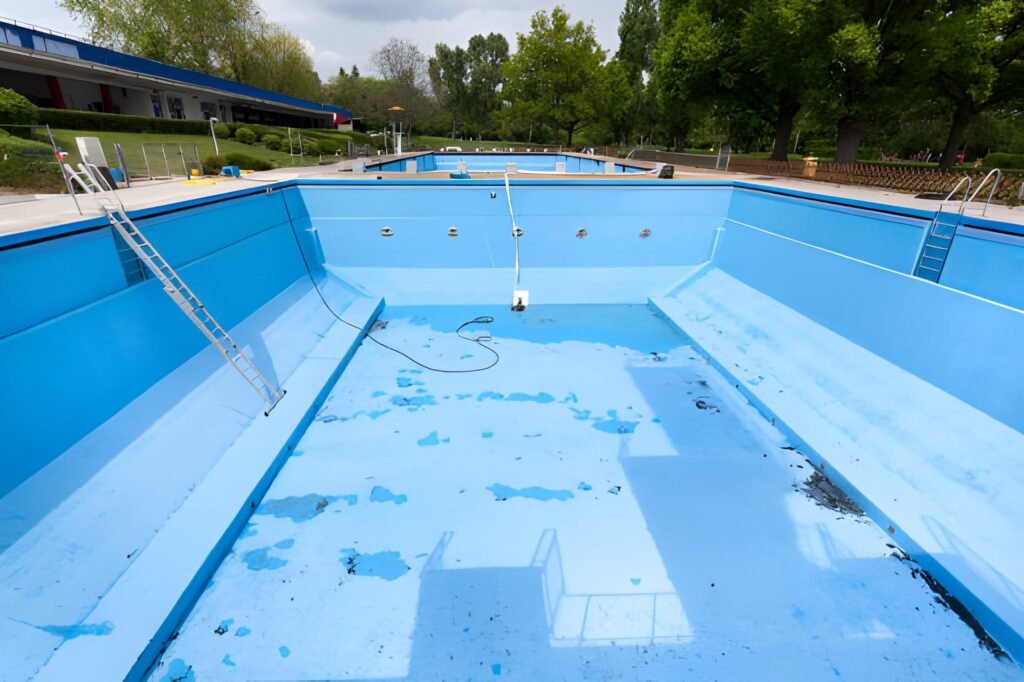
- Drainage and Inspection: The pool is drained, and the shell is thoroughly inspected for cracks and structural issues.
- Surface Removal and Repair: The old plaster or finish is chipped away using specialized machinery. Any cracks in the underlying gunite shell are professionally repaired (“stitched”).
- Equipment Installation: The new pump, filter, and plumbing are installed.
- Tile and Coping: New waterline tile and coping are installed.
- New Interior Finish Application: The new plaster or aggregate finish is applied by a skilled crew.
- Decking and Finishing Touches: The new decking is installed, and the area is cleaned.
- Start-Up and Chemical Balancing: The pool is filled, and the new equipment is started and carefully balanced—a critical phase for the longevity of the new finish.
Budgeting and Strategic Considerations
The cost of a full pool renovation is highly variable, but a comprehensive project typically ranges from \text{\£20,000} to \text{\£50,000}+ in the UK. The final price depends on size, materials, and scope.
The decision to renovate is both financial and personal. A well-executed renovation can restore and even significantly increase a property’s value, especially in markets where a pool is a desirable asset. More importantly, it transforms a neglected, costly feature into a beautiful, efficient, and enjoyable oasis, extending its life for another 15 to 20 years and reintegrating it as the heart of outdoor living.