A total bathroom renovation is a profound undertaking. It is the complete dismantling and reassembly of one of the most technically complex and intensively used rooms in the home. Unlike a cosmetic refresh, a total renovation strips the space back to its structural shell, addressing the hidden anatomy of plumbing, electrics, and ventilation before rebuilding it into a sanctuary of function, form, and wellness. This process demands a meticulous balance between aesthetic vision and rigorous technical execution, where a millimetre’s error in gradient or a poorly specified extractor fan can undo thousands of pounds in investment.
The Strategic Phases of a Total Renovation
A successful total renovation follows a strict, non-negotiable sequence. Skipping or compressing these stages is the most common precursor to failure.
Phase 1: The Diagnostic Strip-Out and Assessment
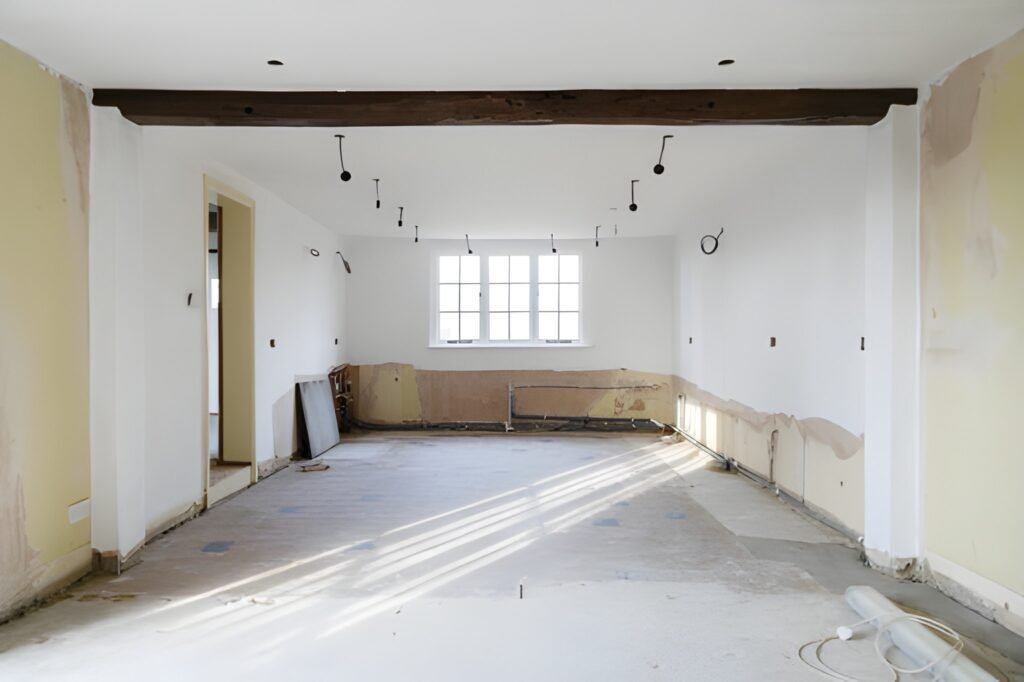
This is the point of no return. Every fitting, tile, and section of plasterboard is removed to expose the underlying structure. This phase is not merely destructive; it is investigative. It reveals the true condition of the substrate, the configuration of existing pipework and waste runs, and any latent issues like rot, damp, or structural weakness. A contingency fund of 10-15% is essential here, as this is where hidden problems are discovered. The cost for a full strip-out, including waste removal, typically ranges from £750 to £1,500.
Phase 2: The First-Fix Infrastructure Overhaul
With the room a bare shell, the critical, unseen work begins. This is the installation of the room’s nervous and circulatory systems.
- Plumbing First-Fix: This involves rerouting hot and cold water supplies and waste pipes to their new locations. For a wet room, this includes installing and sealing the proprietary shower tray or forming a concrete screed with a precise fall. Modern practices often involve using flexible PEX piping in a manifold system, which allows for individual isolation of each outlet and superior pressure control.
- Electrical First-Fix: New circuits are run from the consumer unit for power, lighting, and heated fixtures. This includes cables for underfloor heating, a dedicated spur for an extractor fan, and wiring for shaver sockets, heated towel rails, and any smart controls. All circuits in a bathroom must be RCD-protected.
- Ventilation: Building Regulations (Part F) mandate effective ventilation. For a windowless bathroom, this means installing a continuous-running extractor fan with a 15-minute overrun. The minimum extract rate is 6 litres per second for a toilet and 15 litres per second for a bathroom with a shower. The cost of this first-fix phase is labour-intensive, often accounting for 25-30% of the total project budget.
Phase 3: The Waterproof Shell: Tanking and Insulation
Before any finish is applied, the room must be made impervious to moisture. This is especially critical for shower areas and wet rooms.
- Tanking: A liquid or sheet membrane is applied to all walls and floors in wet areas, creating a watertight barrier that directs any moisture towards the drain. This is a non-negotiable step that prevents leaks into adjacent rooms and structural timbers. A DIY tanking kit costs around £150-£300, but professional installation is highly recommended.
- Insulation: Walls, especially external ones, are insulated with rigid foam boards to prevent heat loss and combat condensation. This improves the room’s thermal performance and comfort.
Phase 4: The Second-Fix and Finishing
This phase transforms the functional shell into a finished room.
- Plastering and Flooring: Walls are plastered or boarded with moisture-resistant plasterboard and skimmed. The underfloor heating system is covered with a self-levelling compound before the final floor finish is laid.
- Tiling: This is a high-skill, time-consuming process. The layout must be planned to avoid slivers of tile at the edges, and the grouting must be consistent and waterproof. The cost of tiling is a function of material and labour: Tile Cost = (Area \times Cost per m² of tiles) + (Area \times £40-£70/m² for labour).
- Fitting Installation: The bathroom suite—bath, basin, toilet, and shower valves—is installed. This is precision work, ensuring all connections are watertight and all fixtures are level and secure.
- Final Connections: The electrician returns to fit lights, switches, and the extractor fan grill. The plumber connects the taps and showerhead and commissions the heating system.
The Financial Anatomy of a Total Renovation
A total bathroom renovation is a significant investment. A realistic budget for a mid-range, high-quality renovation of a standard 3m x 2m bathroom starts at £8,000 and can easily exceed £15,000 for premium materials and complex layouts.
Table: Budget Allocation for a £12,000 Bathroom Renovation
| Category | Scope of Work | Allocated Budget | % of Total |
|---|---|---|---|
| Labour & Professional Fees | Strip-out, plumbing, electrical, tiling, plastering, project management. | £5,000 | 42% |
| Sanitaryware & Brassware | Bath, basin, toilet, shower tray, taps, shower valve, waste kits. | £2,500 | 21% |
| Tiles & Flooring | Wall and floor tiles, adhesive, grout, waterproof flooring. | £2,000 | 17% |
| Heating, Lighting & Ventilation | Underfloor heating kit, extractor fan, heated towel rail, lighting. | £1,200 | 10% |
| Joinery, Accessories & Contingency | Vanity unit, mirror, shelving, and a 10% contingency fund. | £1,300 | 10% |
| Total | £12,000 | 100% |
This breakdown demonstrates that labour is the single largest cost, reflecting the high skill level and multi-trade coordination required.
The Critical Technical Considerations
- Waste Runs and Floor Levels: Altering the location of the toilet is the most complex plumbing task, as the soil pipe requires a specific diameter and fall. Moving it more than a short distance often requires raising the floor level, which has cascading effects on door heights and transitions.
- Water Pressure and Flow Rate: The choice between a mixer shower, electric shower, or digital thermostatic valve depends entirely on your home’s water pressure (measured in bar) and flow rate (measured in litres per minute). Installing a powerful shower on a low-pressure system will result in a disappointing trickle. A site survey should always test this.
- Zoning for Electrical Safety: Bathrooms are divided into zones dictating what electrical equipment can be installed where, based on its proximity to water sources. IP (Ingress Protection) ratings are crucial; a light above a shower must be at least IP65 (water jet protected).
The Value Proposition: Beyond Financial Return
While a well-executed bathroom renovation can recoup 60-70% of its cost in added property value, its true return is often experiential. It creates a daily ritual space that promotes well-being, reduces maintenance stress, and improves the home’s overall energy efficiency. A total renovation is not merely an upgrade of fixtures; it is a fundamental recalibration of the room’s performance and pleasure, transforming a utilitarian space into a personal sanctuary built to last.