The question of council approval is the single greatest point of uncertainty and anxiety for anyone embarking on a renovation in the UK. The process, a dual-track system of Planning Permission and Building Regulations, is often viewed as a bureaucratic obstacle. In reality, it is a structured framework designed to protect the character of local areas, ensure public safety, and guarantee that building work meets minimum standards of health and structural integrity. Understanding not just the rules, but the strategic philosophy behind them, is essential for a successful and compliant project.
The Two Pillars of Approval: Planning Permission vs. Building Regulations
It is critical to distinguish between these two distinct processes, governed by different parts of the legislation and assessed against different criteria.
- Planning Permission: This is concerned with the impact of your project. It answers questions of aesthetics, neighbour amenity, and the use of land and buildings. Will the extension be too large? Does it fit the local character? Will it overshadow the neighbour’s garden? Planning is subjective, assessed against local and national policies.
- Building Regulations: This is concerned with the technical execution of your project. It is a set of minimum standards for design, construction, and alteration. Is the structure sound? Is it energy efficient? Are the fire escapes adequate? Is the ventilation sufficient? Building control is largely objective; the work either meets the technical standards or it does not.
A project may require one, both, or neither. A full house extension will require both. Replacing windows in a non-listed building likely requires only Building Regulations compliance. An internal loft conversion for a new room typically requires Building Regulations approval but may not need Planning Permission.
The First Step: Permitted Development Rights
Permitted Development (PD) rights are a national grant of planning permission that allow certain building works and changes of use to be carried out without a formal planning application. They are the homeowner’s most powerful tool, but they come with strict limits and conditions.
Key Permitted Development rights for houses (not flats or maisonettes) include:
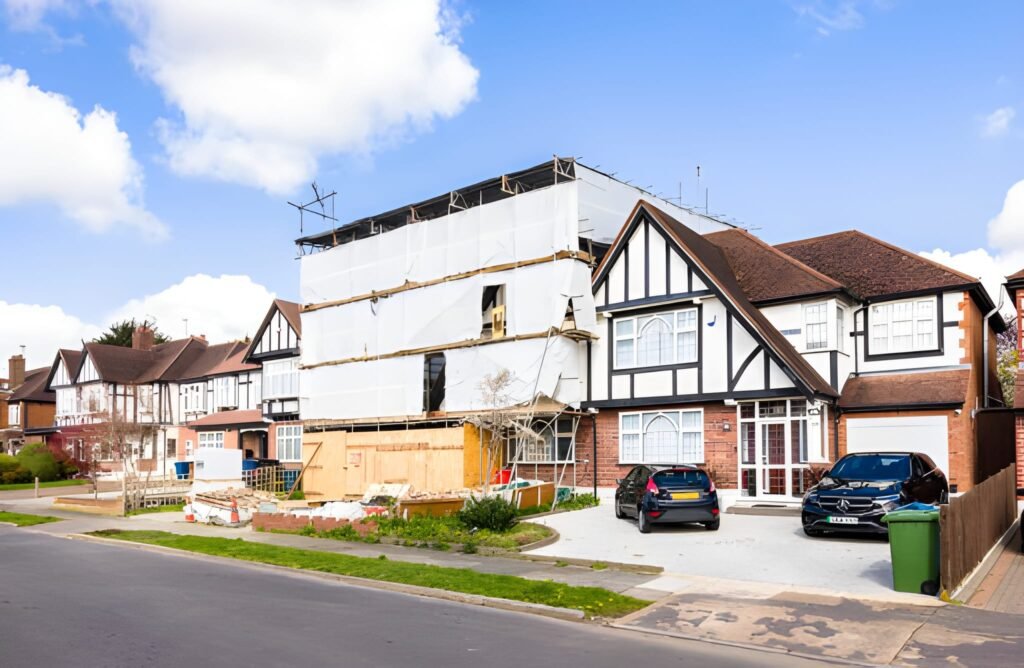
- Single-Storey Rear Extensions: These can extend up to 4 metres from the original rear wall for a detached house, and 3 metres for any other house. Under the Larger Home Extension Scheme, this can be extended to 6m (detached) or 8m (other), but you must undergo a Neighbour Consultation Scheme.
- Loft Conversions: Allowed provided the new volume does not exceed 40 cubic metres for terraced houses, or 50 cubic metres for detached and semi-detached houses. Any extension beyond the plane of the existing roof slope at the front requires planning permission.
- Outbuildings: Sheds, greenhouses, and home offices can be built without planning permission, subject to size and location limits (e.g., not forward of the principal elevation, covering no more than 50% of the garden).
The Critical Caveats to Permitted Development:
PD rights are not universal. They do not apply if:
- Your house is listed or in a designated area (e.g., Conservation Area, Area of Outstanding Natural Beauty, National Park).
- The rights have been removed by a planning condition (an “Article 4 Direction”).
- The work involves flats or maisonettes.
- The extensions exceed the stipulated volume, height, or footprint limits.
The Formal Planning Application Process
When your project falls outside Permitted Development, a formal application is required. This is a strategic exercise in presenting a compelling case.
- Pre-Application Advice: This is a highly recommended, often overlooked step. Most local planning authorities (LPAs) offer a service where a planning officer will review your initial proposals for a fee. This provides invaluable, non-binding feedback on the likelihood of success and can save you thousands in redesign costs later. It is a low-cost risk mitigation strategy.
- The Application Dossier: A planning application is more than just a form. It is a package of evidence designed to persuade the case officer. It typically includes:
- Application Forms: Correctly completed and signed.
- Location Plan and Block Plan: Ordnance Survey-based maps showing the site in context.
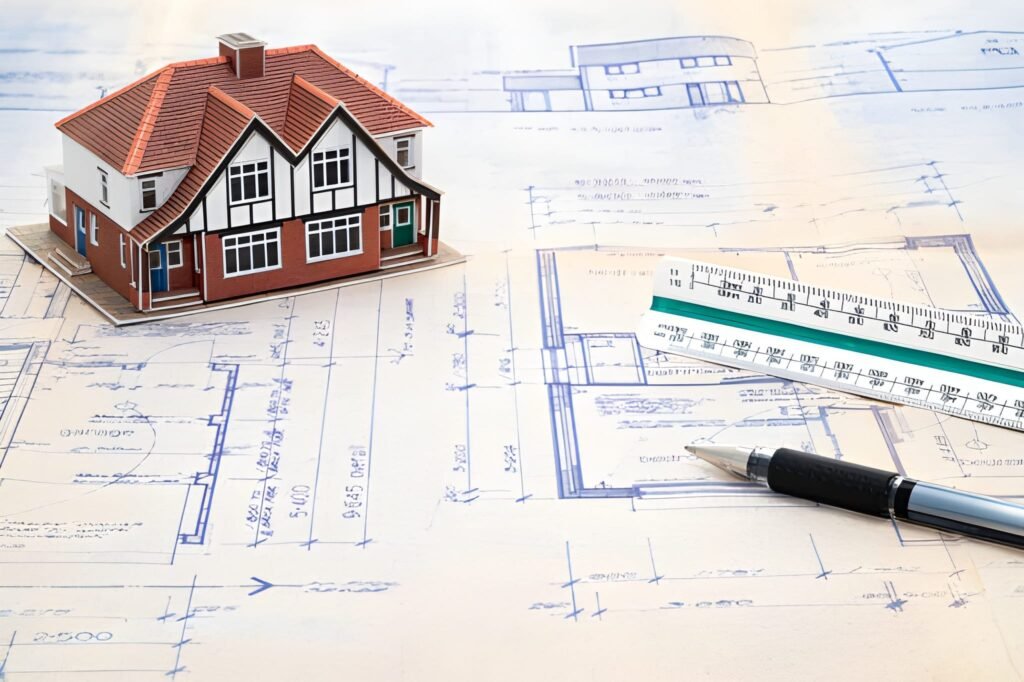
- Existing and Proposed Drawings: Floor plans, elevations, and sections.
- Design and Access Statement: This is your narrative. It explains the design rationale, justifies how the proposal fits with local planning policy, and demonstrates that you have considered overlooking, privacy, and the character of the area.
- The Decision Matrix: Planning officers assess your application against two primary frameworks:
- The National Planning Policy Framework (NPPF): The overarching national policy.
- The Local Plan: Your specific council’s development blueprint, which details policies on design, density, heritage, and green space.
Your Design and Access Statement must explicitly address these policies. The decision is not based on whether the neighbours like it, but on whether it complies with these published plans.
Building Regulations: The Guarantee of Safety and Performance
While planning is about permission, Building Regulations are about compliance. Approval is typically sought in one of two ways:
- Full Plans Application: You submit detailed construction drawings, specifications, and structural calculations to the Building Control Body (either your local council or a private approved inspector) for approval before work starts. This is the lower-risk route, as you get a formal approval notice and the inspector provides a clear roadmap for compliance.
- Building Notice: You give the council 48 hours’ notice before starting work. No detailed plans are submitted. This is suitable for small, straightforward projects but carries more risk, as any work that fails inspection must be rectified at your cost. It places the onus on the builder to know and comply with the regulations on the fly.
The Core Areas Covered by Building Regulations (Approved Documents):
Work will be inspected at key stages to ensure compliance with standards covering:
- Part A (Structure): Is it strong enough?
- Part B (Fire Safety): Are there adequate escape routes and fire protection?
- Part C (Site Preparation & Damp Proofing): Is the building protected from moisture?
- Part L (Conservation of Fuel and Power): Is it energy efficient? This is a major focus, with stringent U-Value targets for walls, floors, and roofs.
- Part P (Electrical Safety): Is the electrical work in bathrooms, kitchens, and outdoors safe?
The Financial and Temporal Realities
Costs and timelines are non-negotiable factors. A householder planning application fee is currently £258. Building Regulation fees are typically higher, often calculated as a percentage of the project value, starting from around £800 for a small extension. The timeline for a planning decision is statutorily 8 weeks, but can extend to 13 or 16 weeks for larger applications. Building Control inspections run parallel to the construction phase.
Strategic Conclusion: Approval as an Investment
Navigating council approval is not a passive hurdle to be cleared; it is an active and strategic phase of the renovation itself. Engaging with the process early, through pre-app advice and careful research of Permitted Development rights, de-risks the entire project. Securing formal approval provides legal certainty, protects your investment from enforcement action, and, crucially, provides the assurance that the renovated space is safe, sound, and sustainable. In the complex calculus of property renovation, professional guidance from an architect, planning consultant, or seasoned builder in this phase is not an expense—it is a premium form of insurance.