A £30,000 budget marks a significant threshold in home renovation, moving from updating single rooms to orchestrating a comprehensive transformation of your property’s key living spaces. This level of investment allows for structural changes, high-specification finishes, and the involvement of a full team of professional tradespeople. The strategic objective with a budget of this size is not merely to decorate, but to fundamentally improve the layout, functionality, and energy performance of the home, thereby achieving a substantial uplift in both daily living experience and long-term market value. Success hinges on a meticulous, project-managed approach where vision, budget, and timeline are carefully balanced.
The foundation of a successful £30,000 renovation is a realistic and disciplined budget allocation. This budget allows for a more substantial contingency and professional fees, acknowledging the increased complexity.
A strategic model for a full-house refurbishment would be:
- Labour & Professional Fees: £12,000 – £15,000 (40-50%)
- Materials & Finishes: £10,000 – £12,000 (33-40%)
- Contingency Fund: £3,000 (10%)
- Project Management & Incidentals: £2,000 (~7%)
This allocation reflects a project where professional skill is required for complex tasks like structural openings, replastering, and electrical upgrades. The contingency is critical; at this scale, uncovering unforeseen issues is a matter of when, not if.
Scenario One: The Open-Plan Living and Kitchen-Diner Transformation
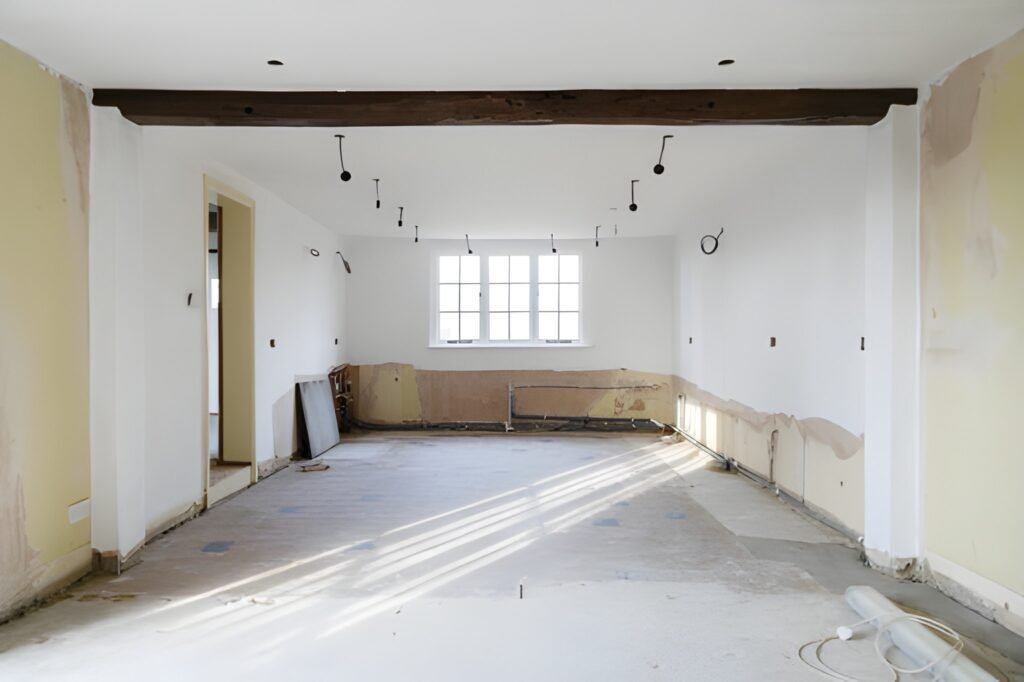
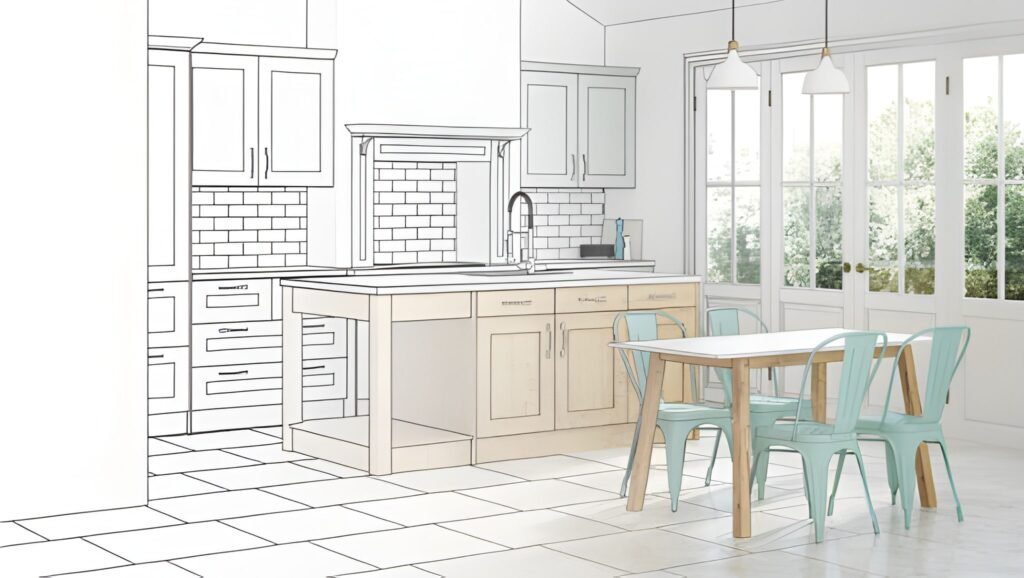
This is the most impactful and popular strategy for a £30k budget. It involves reconfiguring the ground floor to create a modern, open-plan living, kitchen, and dining area, often by removing an internal wall.
The budget breakdown for this scenario could be:
- Structural Work & Making Good: £2,500 - £4,000
This includes a structural engineer’s report, RSJ installation, and the subsequent plastering and flooring required to make good the new opening. - High-Specification Kitchen: £12,000 - £15,000
This budget allows for a kitchen from a quality trade supplier with full-height units, a large island with a breakfast bar, and a premium worktop like a 3cm quartz or composite stone. It includes high-end appliances, such as an American-style fridge-freezer, a powerful induction hob, and a dedicated wine cooler. - Bi-Folding or Large Sliding Doors: £4,000 - £6,000
Integrating the interior with the garden is a key value-driver. This cost covers a standard-sized set of high-quality bifold or sliding doors. - Flooring, Lighting, and Decor: £3,000
Consistent, high-quality flooring like engineered wood or premium LVT throughout the new space, coupled with a sophisticated lighting scheme (e.g., dimmable downlights, feature pendants) and professional decoration.
Scenario Two: The Principal Suite and Bathroom Overhaul
For those prioritising personal luxury, £30,000 can create a stunning principal bedroom suite, potentially by merging two smaller rooms.
The budget allocation would focus heavily on craftsmanship and quality:
- New En-Suite Bathroom: £10,000 - £13,000
This allows for a wet-room style walk-in shower with a frameless glass screen, a freestanding bath, a designer vanity unit, and underfloor heating. Tiling can be large-format porcelain for a seamless, luxury feel. - Built-in Bedroom Furniture: £4,000 - £6,000
Commissioning a carpenter to build floor-to-ceiling, bespoke fitted wardrobes and storage. - Structural and Finishing Work: £5,000
For creating new walls, installing new doors, and high-specification electrical work, including mood lighting in the bedroom and bathroom. - Premium Finishes: £3,000
For feature wallpaper, high-quality carpet, and designer light fittings.
Scenario Three: The Whole-House “Threaded” Refurbishment
This strategy involves modernising every room in a medium-sized terraced or semi-detached house without major structural changes, creating a cohesive, turn-key property.
- New Kitchen: £10,000 (A high-specification version of the £10k model)
- New Family Bathroom: £7,000 (A full suite replacement with quality tiles)
- Re-wiring & Re-plumbing: £5,000 (Upgrading ageing systems for safety and performance)
- Re-decoration & New Flooring Throughout: £4,000
- New Interior Doors & Architrave: £2,000
- External Improvements: £2,000 (e.g., repainting window frames, new front door)
The Strategic Imperatives for a £30k Project
At this budget level, professional oversight is non-negotiable. You will likely need a principal contractor—a reputable general builder—who will manage all sub-trades (carpenters, plasterers, electricians, plumbers). Your role is to provide a clear brief, make timely decisions, and manage the budget, not to coordinate the trades daily.
Your focus should be on “future-proofing” the property. This means investing in energy efficiency, such as topping up loft insulation to 300mm and ensuring all new windows are double-glazed with a low U-value. It also means choosing timeless, neutral designs for expensive items like kitchens and bathrooms that will not date quickly, thereby protecting your investment.
Sourcing becomes more strategic. Use trade counters for materials like plasterboard, insulation, and plumbing supplies. For kitchens and bathrooms, use a specialist trade supplier rather than a high-street retailer; the quality-to-price ratio is significantly better. Always secure three itemised quotes for all major work packages.
A £30,000 renovation, executed with this level of strategic planning and professional execution, is one of the most powerful investments you can make in your property. It has the potential to transform a dated house into a modern, efficient, and highly desirable home, yielding returns that are both financial, in significantly increased equity, and personal, in vastly improved quality of life.