A renovation budget of £50,000 represents a critical threshold in the UK property market. This is the point where a project moves beyond cosmetic updates and into the realm of strategic, value-added transformation. It allows for significant structural changes, a comprehensive overhaul of services, and the creation of new, desirable living spaces. For homeowners and investors, a £50k renovation is a deliberate investment designed to fundamentally alter a property’s layout, performance, and market position. This guide explores the before and after of such a project, detailing the allocation of funds, the execution of key works, and the tangible financial and lifestyle returns.
The ‘Before’ State: A Property with Untapped Potential
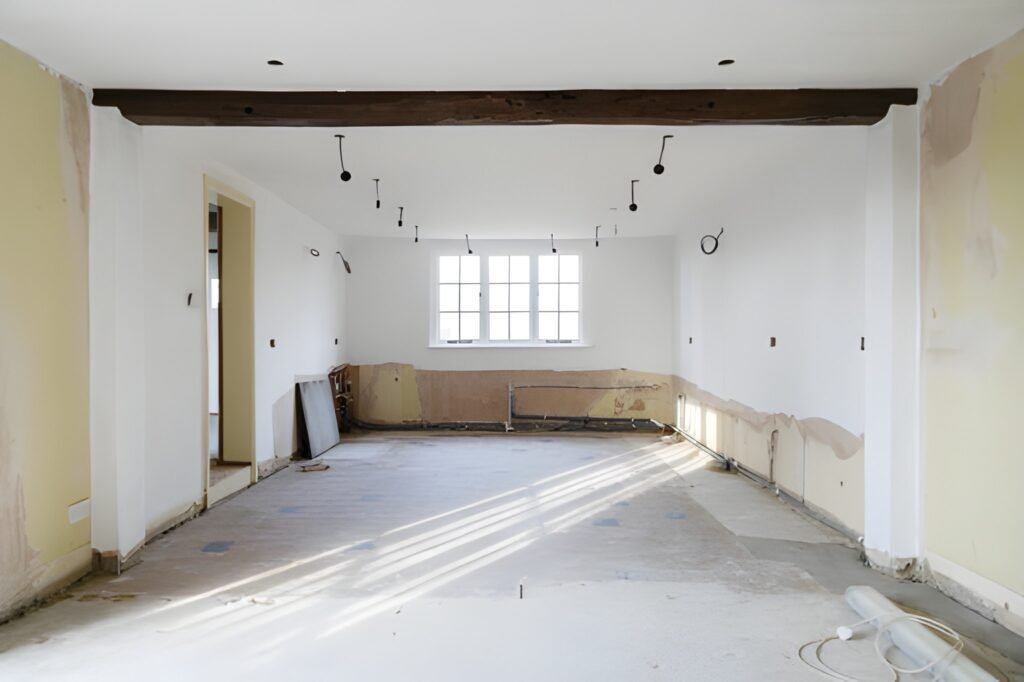
The ideal candidate for a £50,000 renovation is typically a sound but dated post-war semi-detached or a larger Victorian terrace that has been poorly updated. The property is structurally okay but functionally obsolete. Let’s consider a 1930s three-bedroom semi-detached house in a popular suburban location, purchased for £350,000.
Key ‘Before’ Characteristics:
- Layout: A compartmentalised ground floor with a separate, narrow kitchen, a small dining room, and a living room. The flow is poor and does not suit modern open-plan living.
- Services: An old but functioning gas boiler, outdated wiring, and single-pane windows with deteriorating frames.
- Condition: Archaic decor, worn carpets, a dated and inefficient bathroom, and a kitchen from the 1990s. The garden is overgrown but has a good size.
- Potential: The property has a generous plot with space for a side-return extension. The loft has enough height for a conversion. The location is highly desirable, with good schools and transport links.
The strategy is clear: use the £50,000 to modernise the layout, improve energy efficiency, and add tangible square footage and functionality, thereby catapulting the property into a higher value bracket.
The Budget Blueprint: Strategic Allocation of £50,000
With £50,000, discipline is paramount. The budget must be allocated to projects that deliver the highest return on investment, both in financial terms and in liveability. A strategic breakdown would prioritise space creation and infrastructure.
| Phase | Scope of Work | Allocated Budget | % of Total |
|---|---|---|---|
| 1. Single-Storey Rear Extension | Knocking out the rear wall, building a single-storey extension to encompass the kitchen/dining area, including bifold doors and a rooflight. | £22,000 | 44% |
| 2. Loft Conversion (Room-in-Roof) | Creating a new fourth bedroom or a large principal bedroom, including stairs, insulation, Velux windows, and plastering. | £15,000 | 30% |
| 3. Mechanical & Services | New combination boiler and radiators, partial rewire, and new plumbing for the kitchen relocation. | £5,000 | 10% |
| 4. Contingency | For unforeseen structural issues, plastering, and minor adjustments. | £4,000 | 8% |
| 5. Interior Finishes | Kitchen units and appliances, bathroom suite refresh (tiling, new sanitaryware), flooring, and decoration throughout. | £4,000 | 8% |
| Total | £50,000 | 100% |
This allocation is revealing. A full 74% of the budget is dedicated to creating two new, valuable spaces: the open-plan living area and the additional bedroom. The finishes budget is lean, requiring smart choices and a focus on cost-effective but stylish materials.
The Renovation Journey: Executing the Transformation
1. The Rear Extension: Creating the Heart of the Home
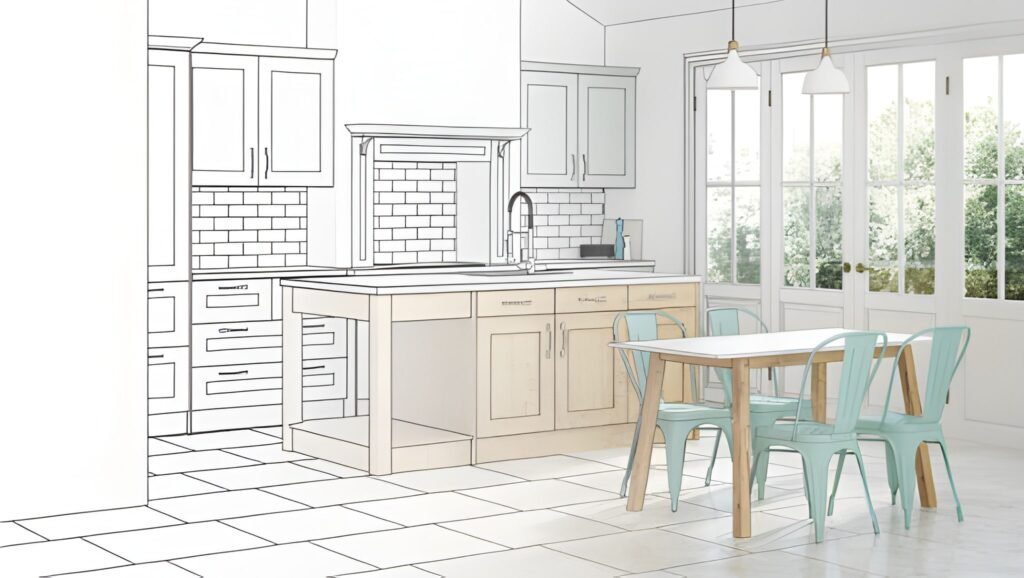
The single most impactful change is the single-storey rear extension. By removing the wall between the old kitchen and dining room and extending into the side return, a generous, light-filled kitchen-dining-living space is created. This modernises the property’s entire feel.
- Cost: £22,000 (includes foundations, steel beam, blockwork, roofing, and bifold doors).
- Challenge: Managing the structural work and ensuring a seamless flow between the old and new parts of the house.
2. The Loft Conversion: Adding a Fourth Bedroom
Converting the loft into a functional room is the second major value-add. A simple “room-in-roof” conversion with two Velux windows creates a large, bright space ideal for a bedroom, home office, or playroom. Adding a fourth bedroom moves the property into a more competitive category for families.
- Cost: £15,000 (includes new loft stairs, structural floor, insulation, plastering, and windows).
- Strategic Value: This addition often has one of the highest returns per square foot of any renovation project.
3. The Infrastructure Update
The £5,000 for services ensures the renovated house is efficient and safe. A new condensing combi-boiler improves heating performance and lowers bills. A partial rewire focuses on the new extension and loft, adding modern sockets and downlighters. The plumbing is reconfigured for the new kitchen layout.
4. The Finishes: Smart and Stylish Choices
With only £4,000 for finishes, creativity is key. The strategy is to invest in a good, mid-range kitchen from a DIY store but install it professionally for a perfect finish. The budget might break down as:
- Kitchen: £2,500 (units, worktop, and sink)
- Appliances: £1,000 (oven, hob, extractor, integrated fridge)
- Bathroom Refresh: £500 (new toilet, basin, and tiles, reusing the existing bath)
The remaining funds cover paint, flooring, and light fittings. The emphasis is on a neutral, bright colour palette that makes the new spaces feel larger and allows the architectural improvements to take centre stage.
The ‘After’: A Quantifiable Leap in Value and Comfort
The transformed property is now a modern, four-bedroom family home with an open-plan living area. It is brighter, more energy-efficient, and functionally superior in every way.
Valuation and Return on Investment (ROI)
The post-renovation valuation is the ultimate measure of success. In its original state, the property was worth £350,000. After the £50,000 renovation, a realistic valuation in a stable market would be £475,000.
The total investment is the purchase price plus the renovation budget.
Total Investment = £350,000 + £50,000 = £400,000The gross profit is the final valuation minus the total investment.
Gross Profit = £475,000 - £400,000 = £75,000The crucial metric is the Return on Investment on the renovation spend itself.
ROI = \frac{£475,000 - £400,000}{£50,000} = \frac{£75,000}{£50,000} = 1.5This equates to a 150% return on the £50,000 investment. This is a powerful demonstration of how strategic capital expenditure can unlock latent value. It is important to note that this does not account for stamp duty, legal fees, or financing costs, which would reduce the net profit. For an owner-occupier, this represents a substantial £75,000 increase in their equity.
Beyond Financials: The Performance and Lifestyle Upgrade
The value created is not purely financial. The Energy Performance Certificate (EPC) rating will have improved significantly due to the new boiler, loft insulation, and double-glazed windows in the extension. The property is cheaper to run and more comfortable to live in.
The lifestyle benefits are profound. The open-plan kitchen-diner becomes the true heart of the home, facilitating family life and entertaining. The fourth bedroom provides crucial flexibility, whether for a growing child, a home office, or a guest room. The renovation has future-proofed the property, making it a desirable and competitive asset for years to come.
A £50,000 renovation, when focused on high-impact structural changes like an extension and a loft conversion, is one of the most effective ways to transform a property’s fortune. It requires a clear vision, disciplined budgeting, and a focus on the elements that truly add space and value. The result is not just a refurbished house, but a fundamentally better home and a significantly stronger financial asset.