Selling a home is not a passive event; it is a strategic project. In the UK’s diverse and often unpredictable property landscape, achieving a premium price requires more than just listing your property and hoping for the best. It demands a deliberate, informed approach that aligns your asset with buyer expectations and market realities. The goal is not merely to sell, but to extract the maximum possible value from one of the most significant financial transactions you will ever make.
This process involves understanding the psychology of the buyer, the mechanics of valuation, and the specific triggers that encourage competitive bidding. The following five tactics are not quick fixes. They are foundational principles, grounded in market experience, that will position your property to outperform comparable sales in your postcode.
1. The First Impression: Mastering Kerb Appeal and The Viewing Threshold
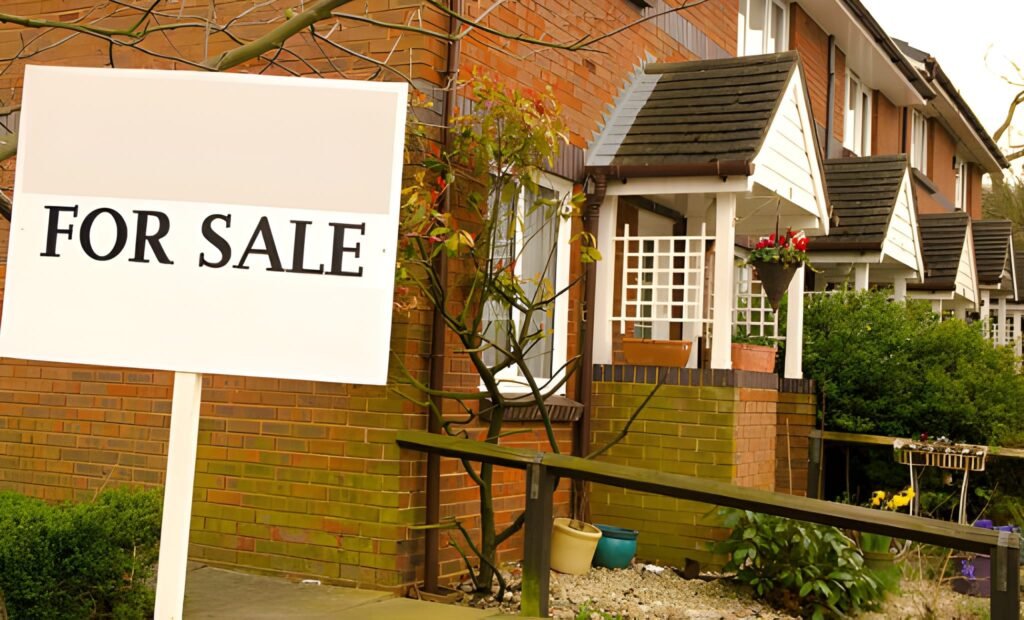
The negotiation for your home’s final price begins not in the living room, but at the kerb. Before a buyer has even set foot inside, they have formed a subconscious opinion. This initial impression, known as kerb appeal, sets the emotional tone for the entire viewing. In a market where online portals like Rightmove and Zoopla offer endless choice, a poor first impression can truncate a viewing before it properly begins.
The Perspective:
Think of your property as a narrative. The exterior is the book’s cover. A cluttered, poorly maintained exterior tells a story of neglect, implying that the hidden, structural elements of the home may also have been overlooked. Conversely, a smart, welcoming exterior suggests a home that has been cherished and meticulously maintained, giving buyers immediate confidence.
Actionable Strategy:
- The Five-Minute Test: Stand directly across the street from your property for five minutes. What do you see? Peeling paint? A cluttered pathway? An overgrown hedge obscuring the windows? Note every flaw. These are the same flaws a buyer will see.
- The Front Door: This is the centrepiece. A freshly painted front door in a contemporary, bold colour (e.g., Farrow & Ball’s ‘Hague Blue’ or ‘Railings’) signals style and care. Ensure the door furniture (knocker, letterbox, handle) is clean and polished.
- Clarity and Light: Clean every window, inside and out. Trim any vegetation that blocks natural light from entering the property. Ensure the garden path is clear, pressure-washed, and well-lit for evening viewings.
- The Garden: You do not need a show garden, but you do need order. Mow the lawn, edge the borders, and plant a few evergreen shrubs for year-round structure. A cracked patio or a fence missing a panel sends a negative signal far exceeding its repair cost.
The Financial Implication:
Estate agents consistently report that strong kerb appeal can add between 5-10% to a property’s perceived value. It is the catalyst that makes a buyer want to see more, putting them in a positive and receptive frame of mind before they cross the threshold.
2. The Art of Depersonalisation and Neutralisation
Once a buyer is inside, your objective shifts. You must now enable them to visualise their own life within your walls. This is the single most important psychological step in the purchasing process. A home filled with your family photos, idiosyncratic decor, and personal memorabilia creates a barrier. The buyer remains a guest in your house. A neutral, well-presented space allows them to become the protagonist in their own story, imagining it as their home.
The Perspective:
This is not about erasing your personality to create a sterile, hotel-like environment. It is about creating a sophisticated, blank canvas that highlights the property’s inherent architectural virtues—its space, light, and proportions—while allowing the buyer’s imagination to project their own furniture and life onto it.
Actionable Strategy:
- Declutter Ruthlessly: This goes beyond tidying. Remove at least 50% of the items from your surfaces, shelves, and cupboards. Consider off-site storage for excess furniture that makes rooms feel smaller. Organised, spacious cupboards photograph well and suggest ample storage, a key buyer priority.
- Neutralise the Palette: Repaint bold, quirky colours. A neutral palette of whites, soft greys, and warm beiges (e.g., Dulux ‘Timeless’ or Farrow & Ball ‘Pointing’) makes spaces feel larger, brighter, and more modern. It provides a harmonious backdrop that suits any buyer’s taste.
- Depersonalise: Pack away family photographs, religious icons, political items, trophies, and children’s artwork. The goal is to create a space that feels universally appealing, not personally specific.
- Define Rooms: Ensure every room has a clear purpose. A dining room should be a dining room, not a dumping ground for laundry and exercise equipment. If you have a small bedroom set up as an office, stage it neatly to show its potential.
Illustration: The Cost of a Can of Paint
Consider a bedroom painted a dark, dramatic red. While you may love it, it forces a specific aesthetic on the buyer. A buyer who prefers calm, minimalist spaces will be immediately put off. They will mentally deduct the cost and effort of repainting from their offer.
Repainting it yourself with a neutral colour for \text{\textsterling}50 in materials removes this objection entirely. The return on investment is profound. You might spend \text{\textsterling}200 on paint for the entire house, but it could protect a value offer thousands of pounds higher.
3. Strategic Upgrades: The Rule of High-ROI Improvements
Not all home improvements are created equal. Pouring \text{\textsterling}30,000 into a luxury kitchen will not automatically add \text{\textsterling}30,000 to your sale price. The key is to identify the upgrades that offer the highest return on investment (ROI) and appeal to the broadest demographic.
The Perspective:
Focus on fixes, not fantasies. Address the items that surveyors will note and that buyers universally desire. Avoid highly personal or niche renovations. The goal is to bring the property up to a modern standard, not to make it the most bespoke house on the street.
Actionable Strategy & Financial Analysis:
The table below outlines common improvements, their estimated cost, and their potential value-add in the UK market.
| Improvement | Estimated Cost (GBP) | Potential Value Add (GBP) | ROI Perspective | Notes |
|---|---|---|---|---|
| New Boiler/Heating System | £2,500 – £4,500 | £3,000 – £5,000 | 100%+ | A major reassurance for buyers. Removes a significant negotiation point. |
| Kitchen Refresh | £3,000 – £8,000 | £5,000 – £10,000 | 70-120% | New doors, worktops, and modern appliances. Avoid full structural changes. |
| Bathroom Upgrade | £2,500 – £5,000 | £3,000 – £6,000 | 70-110% | Re-grouting, new suite, modern fittings. Ensure excellent ventilation. |
| Landscaping & Kerb Appeal | £500 – £2,000 | £5,000 – £10,000 | 200%+ | Consistently the highest ROI. Creates that crucial first impression. |
| Creating a Home Office | £1,000 – £3,000 | £5,000+ | 150%+ | Post-pandemic, a dedicated work space is a huge asset. Use a spare room. |
| Adding off-street Parking | £5,000 – £15,000 | £10,000 – £25,000 | 100-150% | In urban areas, this can be a game-changer, significantly elevating demand. |
| Loft Insulation | £300 – £600 | £500 – £1,000 | 100%+ | Appears on the EPC. A cheap win that improves the energy rating. |
Calculation Example: The Kitchen Refresh
You decide to refresh your dated kitchen without a full refit. You invest:
- New cabinet doors and handles: \text{\textsterling}2,500
- New laminate worktop: \text{\textsterling}800
- New sink and tap: \text{\textsterling}400
- New energy-efficient oven: \text{\textsterling}500
This modernisation makes the kitchen a selling point rather than a drawback. It could add approximately \text{\textsterling}7,000 to the offer price from a buyer who was previously considering a \text{\textsterling}15,000 kitchen budget.
The Return on Investment (ROI) is calculated as:
\text{ROI} = \frac{\text{Value Add} - \text{Investment Cost}}{\text{Investment Cost}} = \frac{\text{\textsterling}7,000 - \text{\textsterling}4,200}{\text{\textsterling}4,200} \approx 0.666 \times 100 = 66.7\%A 66.7% return on capital is exceptional and demonstrates the power of a targeted, intelligent upgrade.
4. The Energy Performance Certificate (EPC): An Underrated Lever
In an era of rising energy costs and heightened environmental awareness, the EPC rating has evolved from a bureaucratic requirement to a genuine value factor. A poor rating (E, F, or G) can severely limit your buyer pool, as many mortgage lenders are now reluctant to finance the least efficient homes. Conversely, a good rating (C or above) is a powerful marketing tool.
The Perspective:
Think of the EPC not as a certificate, but as a running costs forecast. A buyer comparing two similar properties will be drawn to the one with lower projected annual energy bills. A higher EPC rating signifies a modern, well-insulated, and cost-effective home to run.
Actionable Strategy:
- Get Your EPC Early: Do not wait for the estate agent to arrange it. Commission your own EPC as soon as you consider selling. This gives you a clear report on where your property loses points.
- Act on the Recommendations: The report will provide a list of cost-effective improvements. Typical high-impact, low-cost measures include:
- Loft Insulation: Topping up to 270mm is one of the cheapest and most effective upgrades.
- Cavity Wall Insulation: If your property has unfilled cavities.
- Draught-Proofing: Sealing gaps around windows, doors, and floorboards.
- Low-Energy Lighting: Replacing all halogen bulbs with LEDs.
- Smart Thermostat: Demonstrating modern, efficient heating control.
- Reassess: After making improvements, you can have the EPC reassessed to lock in the higher rating before marketing begins.
Financial Implication:
While difficult to quantify precisely, a move from an E to a C rating could add 1-3% to your property’s value. More importantly, it removes a major objection and makes your home future-proof against increasingly stringent energy efficiency regulations.
5. The Professional Partnership: Choosing the Right Estate Agent
Your choice of estate agent is the final and perhaps most critical tactical decision. The wrong agent will undervalue your property, use poor photography, and fail to negotiate effectively. The right agent will become a strategic partner, providing expert valuation, professional marketing, and skilled negotiation to maximise your final sale price.
The Perspective:
Do not choose an agent based solely on who quotes the highest asking price or the lowest fee. The highest quote can be a tactic to win your instruction and often leads to a property stagnating on the market before a painful price reduction. The cheapest fee often reflects a cheap service.
Actionable Strategy:
- Interview Three Agents: Invite three local, reputable agents to provide a valuation. Do not just ask for the figure. Interrogate their reasoning.
- Ask for a Comparable Market Analysis (CMA): A good agent will provide a detailed report showing recent sold prices (not just asking prices) for properties truly comparable to yours. They will justify their valuation with data.
- Review Their Marketing Plan: Ask to see examples of their photography, floor plans, and property descriptions for other listings. Are the photos bright, wide-angled, and professional? Is the description compelling and free of clichés? Do they use video or virtual tours?
- Discuss Fees in Context: A good agent earning a 1.5% fee who negotiates a price \text{\textsterling}10,000 above a mediocre agent charging 1% has more than earned their commission.
- Agent A (1% fee): Sells for \text{\textsterling}400,000. Fee = \text{\textsterling}4,000. You receive \text{\textsterling}396,000.
- Agent B (1.5% fee): Sells for \text{\textsterling}410,000. Fee = \text{\textsterling}6,150. You receive \text{\textsterling}403,850.
Conclusion: A Synthesis of Strategy
Maximising your home’s value is a deliberate process that synthesises these five tactics. It begins outside with kerb appeal, which opens the door emotionally. It continues inside with depersonalisation, which allows the buyer to mentally move in. Strategic, high-ROI upgrades address objective valuation criteria, while improving the EPC rating future-proofs the asset. Finally, the right professional agent executes the strategy with expert marketing and negotiation.
This approach requires effort, investment, and a shift in perspective—from homeowner to strategic seller. The reward, however, is a final sale price that reflects the true worth of your asset and provides the strongest possible foundation for your next move. In the complex theatre of the UK property market, the prepared and strategic seller always takes the centre stage.