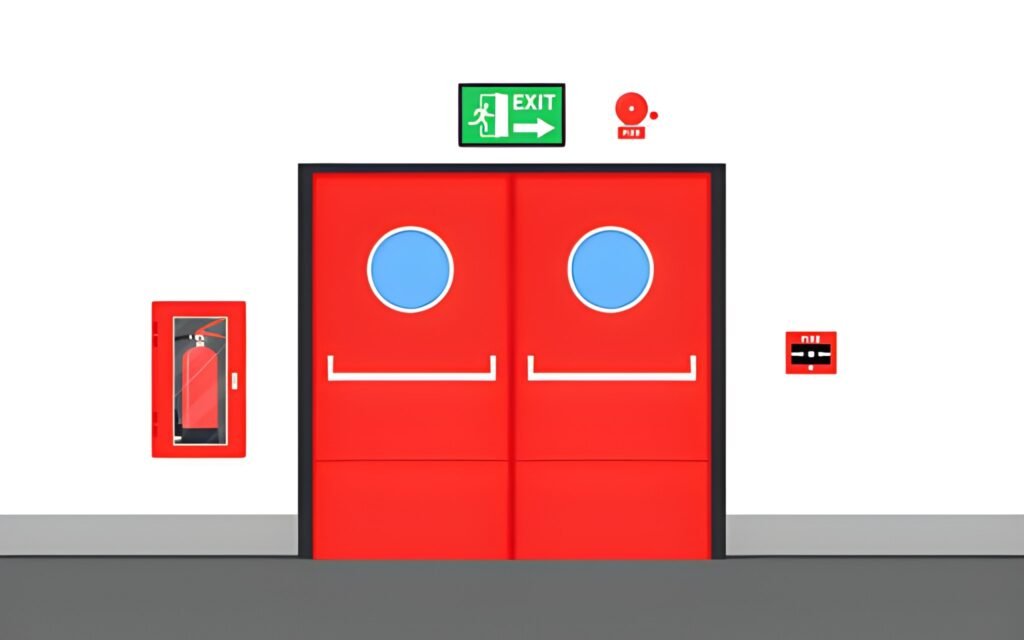
In the intricate web of regulations governing Houses in Multiple Occupation (HMOs), few elements carry as much weight as the fire door. It is not merely a passive component of the building’s fabric; it is an active, engineered safety device, a critical barrier designed to compartmentalise fire and smoke, creating protected escape routes. For an HMO landlord, understanding, specifying, and maintaining fire doors is not a matter of best practice—it is a fundamental legal and moral obligation. Failure in this duty can have catastrophic human consequences and severe legal repercussions, including unlimited fines and imprisonment. This guide delves into the technical specifications, legal requirements, and practical maintenance protocols that define a compliant HMO fire door.
The Critical Role of Fire Doors in an HMO
The operational principle of a fire door is simple yet vital: to hold back fire and smoke for a prescribed period, typically 30 minutes (FD30) or 60 minutes (FD60). In an HMO, where multiple households live in close proximity, the risk profile is inherently higher. A fire starting in one bedroom or a shared kitchen can threaten the entire occupancy. Fire doors serve two primary functions. They provide compartmentation, effectively creating a series of fire-resistant boxes within the property. This containment slows the spread of flames and hot gases, preventing a localised fire from rapidly becoming a whole-house inferno. Simultaneously, they protect the means of escape, particularly stairwells and hallways. By installing a fire door at the entrance to each habitable room and the kitchen, these critical escape routes are shielded, giving tenants precious time to evacuate safely.
The law is unequivocal. The Regulatory Reform (Fire Safety) Order 2005 places a duty on the “Responsible Person” (the landlord or managing agent) to conduct a suitable and sufficient fire risk assessment. This assessment must identify the need for, and the correct specification of, fire doors. Furthermore, HMO licensing conditions imposed by local authorities almost universally mandate the installation of certified fire doors in specific locations. Non-compliance is a criminal offence.
The Anatomy of a Compliant Fire Door
A fire door is a complete system, not just a solid-looking door. Its rating and performance depend on the correct integration of every component. A failure in any single part can compromise the entire assembly.
The Door Leaf: This is the door itself. For an HMO, a minimum 30-minute integrity (FD30) rating is standard, though some councils may require FD60 in specific circumstances, such as protecting a stairwell in a large, multi-storey HMO. The door must be manufactured to British Standard BS 476 Part 22 or the European equivalent BS EN 1634-1. Crucially, it must have a permanent label or plug, often found on the top or side edge, certifying its rating. A solid timber door is not automatically a fire door; it must be certified.
The Frame: The door frame is an integral part of the fire door assembly. It must be equally robust and fitted securely to the surrounding structure. A certified fire door fitted into a standard, non-fire-rated frame will not perform as required in a fire.
Intumescent Seals: These are the most critical and often overlooked components. These seals are installed in a groove within the door or the frame. They are inert at normal temperatures but expand dramatically when exposed to heat, swelling to fill the gaps between the door and the frame. This action seals off the oxygen supply that fuels the fire and blocks the passage of toxic smoke, which is the primary cause of fire-related fatalities. A fire door without functional intumescent seals is fundamentally ineffective.
Hardware: Hinges, Locks, and Door Closers: Every piece of hardware must be compatible with the door’s fire rating. Three heavy-duty steel hinges are typically required to bear the door’s weight and prevent warping. All ironmongery must be CE marked for fire performance. The most critical hardware is the self-closing device. A fire door is useless if it is left propped open. An overhead door closer or a Perko-style jamb closer must be fitted to ensure the door closes fully and latches into the frame automatically after use.
The Gap Tolerances: The gaps around the door are precisely defined. The gap between the door and the frame should be consistently 2-4mm around the top and sides. Underneath the door, the gap can be larger, but it should not exceed 8-10mm. If the gap is too large, it can be reduced by fitting a fire-rated threshold seal.
Locations: Where Must Fire Doors Be Fitted?
The fire risk assessment will determine the final placement, but standard practice in an HMO mandates fire doors in the following locations:
- On all habitable rooms (bedrooms, living rooms).
- On the kitchen.
- On any room that leads to a protected escape route, such as a hallway or stairwell.
- Between the main living accommodation and an integral garage.
Doors to bathrooms, toilets, and small cupboards typically do not require a fire rating, unless they open directly onto a protected stairway.
Installation and Maintenance: An Ongoing Duty
The legal duty does not end with installation. The Responsible Person must ensure all fire doors are maintained in good working order. A robust inspection regime is essential and should be documented as part of your fire safety management plan.
The Six-Point Check:
- Certification: Look for the manufacturer’s label to confirm it is a certified fire door.
- Apertures: Check that any glazing or air transfer grilles are correctly fitted and have the appropriate fire rating. A hole drilled for a cable can nullify the door’s integrity.
- Gaps: Use a 4mm-thick object to check the gaps around the top and sides. It should not fit easily.
- Seals: Ensure intumescent seals are present around the door or frame, are continuous, and are in good condition, not painted over or damaged.
- Hinges: Check for three or more firmly fixed heavy-duty hinges with no missing or loose screws.
- Closing: Check that the door closes firmly onto the latch from any open position. It must not stick or require slamming. The self-closing device must be functional.
Common Failures and Pitfalls for Landlords
Many well-intentioned landlords fall foul of common errors. Tenants often prop fire doors open to improve ventilation or for socialising. This single act renders the entire safety system useless. A clear tenancy agreement clause and regular communication on this point are vital. Another frequent issue is unauthorised modification. A tenant installing a latch, a cat flap, or a letterbox without consultation can critically compromise the door. The tenancy agreement must explicitly forbid such actions. Finally, poor maintenance is a major pitfall. Worn seals, broken closers, and damaged doors are common findings in council inspections. A schedule of quarterly checks can identify and rectify these issues before they become a serious risk or a licensing violation.
A Summary of Fire Door Components
| Component | Requirement | Purpose | Common Failure |
|---|---|---|---|
| Door Leaf | Certified FD30 or FD30S (S for smoke seal). | Provides the core fire-resisting barrier. | Uncertified “solid” door used; certification label missing. |
| Intumescent Seals | Must be present in door or frame edge, continuous and unpainted. | Expands in heat to seal gaps, preventing oxygen and smoke passage. | Missing, painted over, or damaged. |
| Smoke Seals | (Often combined with intumescent seals). | Brushes or blades to block cold smoke at room temperature. | Worn or missing, allowing smoke through gaps. |
| Self-Closing Device | Overhead closer or jamb closer, correctly adjusted. | Ensures door is never left open, maintaining compartmentation. | Tenant props door open; closer arm broken or incorrectly adjusted. |
| Hinges | Minimum of three steel hinges, certified for fire use. | Supports door weight, prevents warping under heat. | Standard domestic hinges used; screws loose or missing. |
| Gaps | 2-4mm around top and sides; ≤10mm at bottom. | Allows door to operate without compromising seal integrity. | Gaps too wide due to poor installation or settling. |
In conclusion, the HMO fire door is a sophisticated life-safety system. Its specification, installation, and maintenance require a meticulous, knowledge-based approach. For the responsible landlord, investing in correct, certified fire doors and implementing a rigorous inspection regime is the most direct action one can take to protect tenants, safeguard an investment, and fulfil the profound legal duties inherent in operating an HMO. It is a technical requirement that sits at the very heart of ethical and compliant property management.