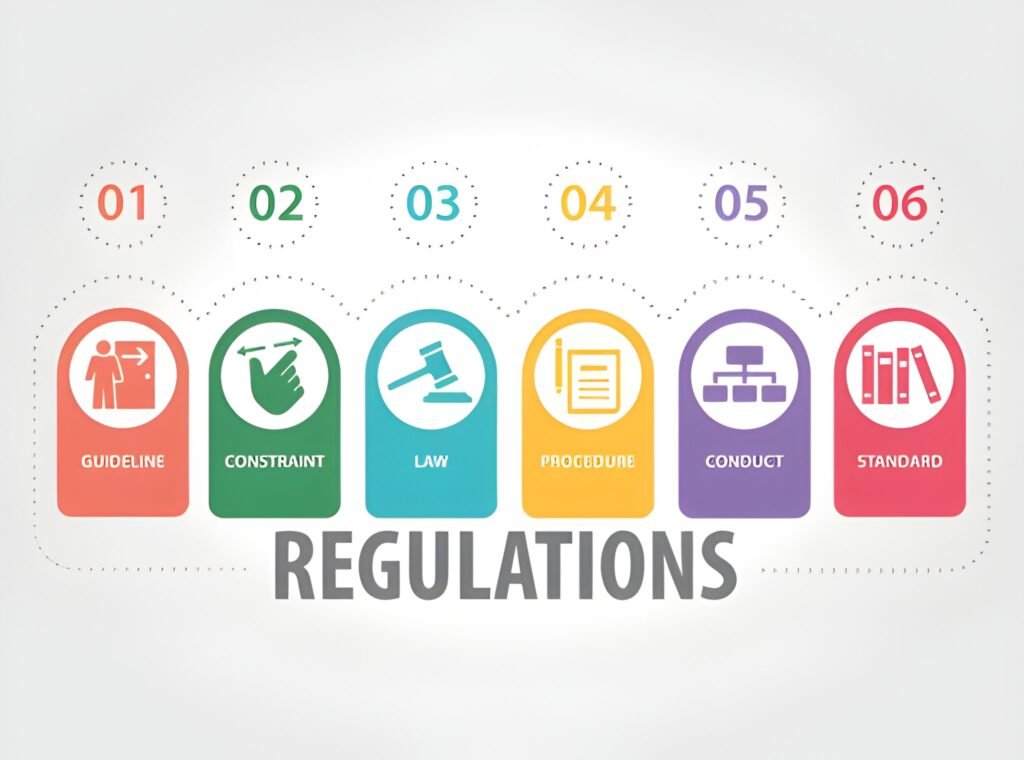
The management regulations for Houses in Multiple Occupation (HMOs) form a comprehensive code of practice that governs the day-to-day operation of a shared rental property. These rules, primarily set out in the Management of Houses in Multiple Occupation (England) Regulations 2006, impose a proactive duty of care on landlords and managing agents that extends far beyond a standard tenancy. Compliance is not optional; it is a continuous legal obligation designed to protect the health, safety, and welfare of tenants living in a higher-risk environment.
The Core Duty: The Manager’s Responsibilities
The regulations explicitly name the “manager” (the landlord or their appointed agent) and assign them specific, legally enforceable duties. These can be categorised into several key areas.
1. Duty to Provide and Maintain Safety Information
The manager must ensure that the following information is clearly displayed in a prominent position within the HMO, such as the common hallway:
- The Manager’s Contact Details: The name, address, and telephone number of the manager or their contact agent. This must be available 24/7 for reporting emergencies.
- Fire Safety Instructions: Clear instructions on what to do in the event of a fire, including the operation of the fire alarm and the location of all escape routes.
2. Duty to Maintain Water, Drainage, Gas, and Electrical Systems
This is a proactive duty to ensure all core systems are safe and in good working order.
- Water Supply & Drainage: All tanks, pipes, and drains must be maintained to ensure a supply of wholesome water and prevent blockages or contamination.
- Gas Safety: A yearly Gas Safety Check must be carried out by a Gas Safe registered engineer, and a certificate must be provided to the council and tenants.
- Electrical Safety: The electrical installation must be safe and inspected by a qualified person at least every five years, producing an Electrical Installation Condition Report (EICR). All appliances provided (e.g., cookers, kettles) must be safe (PAT testing is best practice).
3. Duty to Maintain Common Areas, Fixtures, and Fittings
The manager must ensure that all shared parts of the HMO are kept in good repair, clean, and safe.
- This includes staircases, hallways, landings, kitchens, bathrooms, and windows.
- It covers fixtures like baths, sinks, and toilets, and fittings like cookers and cupboards.
- Exterior walls, roofs, and guttering must also be maintained to prevent damage or damp.
4. Duty to Provide and Maintain Waste Disposal Facilities
Adequate refuse and litter storage facilities (e.g., bins) must be provided for the number of occupants. The manager is responsible for ensuring the proper disposal of this refuse, which typically means arranging and paying for council collections or a private service.
5. Duty to Ensure Fire Safety
While separate fire safety orders apply, the management regulations reinforce these duties, requiring the manager to:
- Take all reasonable measures to protect occupants from fire.
- Maintain all firefighting equipment and fire alarm systems.
- Ensure all means of escape are kept free from obstruction at all times.
The Duty to Not Overcrowd and Maintain Room Sizes
The manager must ensure the HMO is not overcrowded. This is now directly linked to the national minimum room sizes:
- A room used by one person over 10 years old must be at least 6.51 square metres.
- A room used by two people over 10 years old must be at least 10.22 square metres.
- Any room smaller than 4.64 square metres cannot be used as sleeping accommodation.
Letting a room in breach of these standards is a direct breach of the management regulations.
The Consequences of Non-Compliance
Breaching the HMO management regulations is a criminal offence. Local councils have powerful enforcement tools:
- Civil Penalties: For each breach, a council can issue a financial penalty of up to £30,000. Multiple breaches can lead to multiple fines.
- Improvement Notices: The council can serve a formal notice requiring works to be completed within a specified timeframe.
- Prosecution: In serious cases, managers can be prosecuted in a magistrates’ court, leading to an unlimited fine and a criminal record.
- Banning Orders: For the most serious and repeat offenders, the council can apply for a banning order, preventing them from being a landlord altogether.
The Practical Application: A Manager’s Checklist
For a landlord, this translates into a continuous cycle of action:
- Pre-Tenancy: Ensure the property is fully compliant (fire alarms, EICR, gas safety) before any tenant moves in.
- At Start of Tenancy: Provide tenants with the prescribed information, a copy of the gas safety certificate, the EICR, and the government’s “How to Rent” guide.
- During Tenancy:
- Conduct quarterly inspections of the property and common areas.
- Respond promptly to repair requests.
- Test the fire alarm weekly and service it professionally every six months.
- Renew the gas safety certificate annually.
- Record Keeping: Maintain a detailed log of all inspections, tests, repairs, and communications with tenants.
In summary, HMO management regulations impose a high, ongoing standard of care. They demand a proactive, systematic, and documented approach to property management. For landlords, this means that managing an HMO is not a passive investment but an active business that requires time, expertise, and a meticulous attention to legal detail. Viewing these regulations as an operational manual rather than a list of restrictions is the key to running a successful, compliant, and safe HMO.