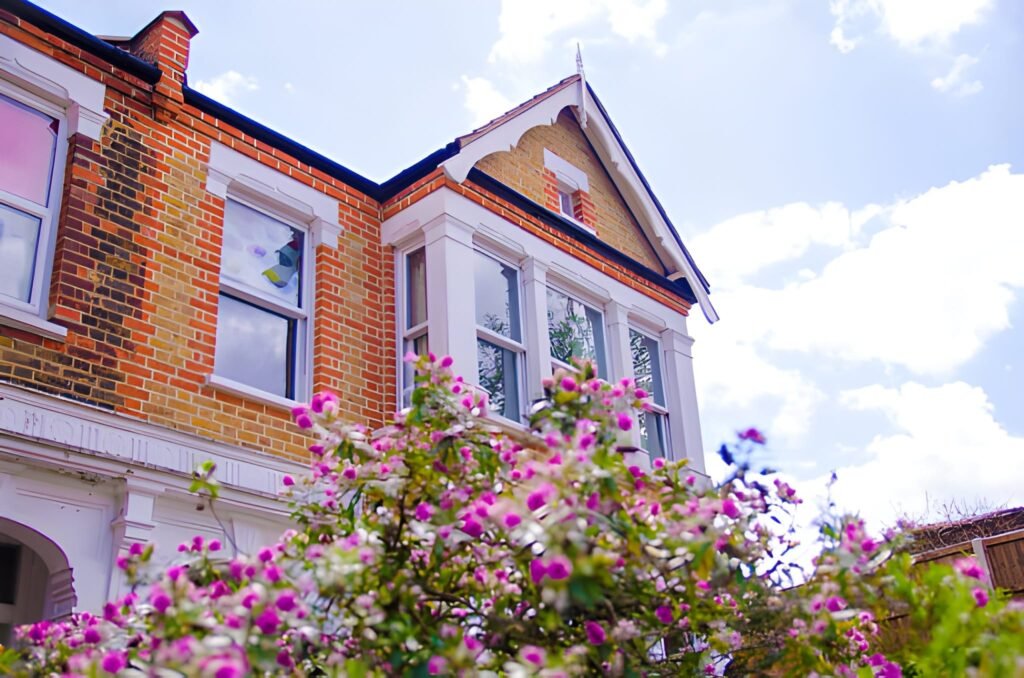
Purchasing your first home is a pivotal life event. It marks a transition from renting to building equity, from temporary residence to a permanent base. In the United Kingdom, the journey from saving a deposit to receiving the keys is a complex process, one that requires a clear understanding of financial, legal, and practical considerations. This guide explores the entire process from a UK perspective, providing a framework for approaching this significant undertaking with confidence and clarity. We will dissect the journey into a series of logical steps, from initial financial preparation to the moment of completion, with a focus on empowering you to make informed decisions.
The Financial Foundation: Preparing to Buy
The first step in any property purchase is building a solid financial base. This involves more than just saving a deposit; it requires a holistic review of your financial health, including income, outgoings, and credit history.1
The Deposit: A Cornerstone of Your Purchase
The deposit is the most significant upfront cost you will face.2 While it is possible to find mortgages with a 5% deposit, a larger deposit, ideally 10% or more, often unlocks a wider range of competitive mortgage products with lower interest rates. This is because a higher deposit reduces the lender’s risk.
Consider a simple illustration.
- Property Value: £250,0003
- 5% Deposit: £12,500
- 10% Deposit: £25,000
A larger deposit directly impacts your Loan-to-Value (LTV) ratio, a key metric for lenders.4 The LTV is the proportion of the property’s value that you borrow.
\text{LTV} = \frac{\text{Mortgage Amount}}{\text{Property Value}} \times 100
If you purchase a £250,000 property with a 5% deposit (£12,500), your mortgage is £237,500.5
\text{LTV} = \frac{\text{£237,500}}{\text{£250,000}} \times 100 = 95%
With a 10% deposit (£25,000), your mortgage is £225,000.
\text{LTV} = \frac{\text{£225,000}}{\text{£250,000}} \times 100 = 90%
A lower LTV generally corresponds to a better interest rate, which translates to a smaller monthly repayment.6 Over a 25-year mortgage term, this difference can amount to thousands of pounds in savings.
Understanding Your Borrowing Power
Before you begin viewing properties, you need to know what you can realistically afford. Lenders typically assess your borrowing capacity based on a multiple of your annual income.7 While a common guideline is 4.5 times your salary, this is not a universal rule. The actual amount depends on several factors:
- Income and Outgoings: Lenders conduct a detailed affordability assessment, scrutinising your monthly income against your regular expenses, including credit card bills, loans, and other financial commitments.8 They need to be confident you can manage mortgage repayments, particularly if interest rates rise.
- Credit History: Your credit report provides a history of your financial behaviour. A strong credit score demonstrates reliability to a lender. Before applying for a mortgage, obtain a copy of your credit file from a credit reference agency like Experian, Equifax, or TransUnion.9 Rectify any inaccuracies and close old, unused accounts to improve your score.10
- The Mortgage in Principle (MIP): A Mortgage in Principle, also known as a Decision in Principle or Agreement in Principle, is a document from a lender that estimates how much they are willing to lend you.11 It is not a formal offer, but it demonstrates to estate agents that you are a serious buyer. Securing an MIP is a crucial step before you start house hunting.
The Search and Offer: Finding Your Home
With your finances in order, the practical search for a property can begin. This stage requires a combination of strategic research, property viewings, and careful negotiation.
The Search: Needs versus Wants
Define your non-negotiable needs versus your desirable wants. A “needs” list might include proximity to a school, a minimum number of bedrooms, or a garden.12 Your “wants” list might feature a separate utility room or a large kitchen island. A clear distinction helps you focus your search.
Table 1: Needs vs. Wants in Property Selection
| Needs | Wants |
| Minimum 2 bedrooms | 3 bedrooms or more |
| Located within 1 mile of a train station | A garage or off-street parking |
| Good school catchment area | A large, private garden |
| Commute time to work under 45 minutes | Open-plan living space |
The UK property market operates with a distinct vocabulary. You will encounter terms like “freehold” and “leasehold.”13 A freehold property means you own the building and the land it stands on. A leasehold property means you own the building for a fixed period, and a freeholder owns the land. Leasehold properties often come with ground rent and service charges, which are additional costs to consider.14
The Offer: Strategic Negotiation
Once you have found a property you wish to buy, you submit an offer to the seller’s estate agent.15 The agent is legally obligated to pass all offers to the seller. Do not be afraid to negotiate. Research recent sales prices for similar properties in the area to support your offer. A well-researched offer, backed by your MIP, carries more weight.
Consider a scenario where a property is listed for £300,000. You have an MIP for a £270,000 mortgage and have a £30,000 deposit. Local sold data suggests similar homes are selling for around £295,000. You might begin with a lower offer to test the seller’s response.
\text{Initial Offer} = \text{Asking Price} \times 0.95
In this case:
\text{Initial Offer} = \text{£300,000} \times 0.95 = \text{£285,000}
This initial offer gives you room to negotiate upwards if the seller declines. The negotiation process can be emotional, but it is a business transaction. Stay calm, and do not exceed the budget you established at the outset.
Navigating the Legal and Survey Stages
Once an offer is accepted, the property purchase enters the legal and administrative phase. This is where you engage professionals to manage the transaction and verify the property’s condition.
Appointing a Conveyancer
A conveyancer or solicitor handles all the legal work involved in transferring property ownership.16 Their role is critical. They perform property searches, check the legal title, manage the contract exchange, and transfer funds.17 Choose a conveyancer who is experienced and has a clear fee structure. Their work protects you from unexpected issues.
Key searches performed by a conveyancer include:
- Local Authority Search: Checks for planning permissions, building control, and proposed road schemes.
- Water and Drainage Search: Confirms the property is connected to a public water supply and drainage system.
- Environmental Search: Identifies issues like land contamination or flood risk.
The Property Survey
While your mortgage lender conducts a basic valuation to ensure the property is worth the amount you are borrowing, this is not a detailed inspection of its condition. A separate, independent survey is a prudent investment.18 It can reveal hidden defects and provide a negotiation point if expensive repairs are necessary.19
There are three main types of surveys:
- RICS Home Survey Level 1 (Condition Report): The most basic survey, suitable for modern, standard-construction properties in good condition.20
- RICS Home Survey Level 2 (Homebuyer Report): A more detailed inspection, suitable for standard properties built after 1900. It highlights potential issues like damp and provides an estimated cost of repairs.
- RICS Home Survey Level 3 (Building Survey): The most comprehensive survey, recommended for older, larger, or non-standard properties, or for homes you plan to extensively renovate.21 It provides a thorough breakdown of the property’s structure and condition.22
The cost of a survey varies based on the property’s value and the survey type.23
Table 2: Estimated Survey Costs by Property Value
| Property Value (£) | Level 2 (Homebuyer Report) | Level 3 (Building Survey) |
| £150,000 | £450 – £600 | £700 – £950 |
| £300,000 | £600 – £800 | £950 – £1,200 |
| £500,000 | £750 – £1,000 | £1,200 – £1,500 |
Note: These are estimates. Final costs can vary by location and surveyor.
The Mortgage Application and Government Schemes
After your offer is accepted, you transition from the MIP to a full mortgage application.24 This is a detailed process requiring extensive financial documentation.25 Concurrently, you should explore government-backed schemes designed to assist first-time buyers.26
The Full Mortgage Application
Your mortgage application is a comprehensive submission of your financial life.27 Prepare the following documents in advance to streamline the process:
- Proof of identity and address (passport, driving licence, utility bills).28
- Proof of income (payslips for the last three months, P60, and if self-employed, two to three years of tax returns and accounts).29
- Bank statements (typically the last three to six months).30
- Details of all financial commitments, including credit cards and loans.31
The lender conducts a final credit check and a property valuation.32 If all checks are successful, they issue a formal mortgage offer, which outlines the terms of your loan.33 This document is legally binding on the lender for a fixed period, typically six months.
UK Government Schemes for First-Time Buyers
The UK government offers various initiatives to help first-time buyers overcome the deposit hurdle and access affordable homes.34 These schemes are subject to change, so verify the latest eligibility criteria.
- Lifetime ISA (LISA): A savings account where the government adds a 25% bonus to your savings, up to a maximum of £1,000 per year.35 It is a powerful tool for building a deposit, but you must be a first-time buyer and the property must be worth £450,000 or less.36
- Shared Ownership: This scheme allows you to buy a share of a property (typically between 10% and 75%) and pay rent on the rest.37 You then have the option to buy more shares over time, a process known as “staircasing.”38 It lowers the initial deposit and mortgage amount, making home ownership more accessible.
- First Homes Scheme: A new initiative that offers new-build properties to first-time buyers at a discount of at least 30% off the market value.39 The discount is tied to the property, ensuring it remains affordable for future first-time buyers.40
Let us illustrate the financial benefit of the Lifetime ISA.
Suppose you save £4,000 annually into a LISA.
- Your annual contribution: £4,00041
- Government bonus (25%): £1,000
- Total annual saving: \text{£4,000} + \text{£1,000} = \text{£5,000}
Over five years, your total savings and bonus would be:
\text{Total Savings} = (\text{Annual Contribution} + \text{Bonus}) \times \text{Number of Years}
\text{Total Savings} = (\text{£4,000} + \text{£1,000}) \times 5 = \text{£25,000}
This significant boost accelerates your deposit-saving efforts.
The Final Stages: Exchange and Completion
The last part of the process involves the formal exchange of contracts and the final completion of the sale.42 This is the point of no return.
Exchange of Contracts
This is the moment the transaction becomes legally binding. Your conveyancer will confirm that all searches and checks are complete and satisfactory. You will sign the contract and pay your deposit (a portion of the purchase price) to your conveyancer.43 They then “exchange” contracts with the seller’s solicitor.44 At this point, you are legally committed to buying the property.45 Should you pull out of the sale after the exchange, you would lose your deposit. The seller is also legally committed to selling to you. A completion date is set at the time of exchange, typically a week or two later.46
Completion Day
This is moving day. On completion day, your mortgage lender transfers the mortgage funds to your conveyancer.47 Your conveyancer combines these funds with your deposit and any remaining balance and transfers the total to the seller’s conveyancer. Once the funds are received, the sale is completed. The estate agent receives a call from the seller’s solicitor and can then release the keys to you. You are officially a homeowner.
The Hidden Costs: Beyond the Purchase Price
The purchase price is only part of the total cost.48 Several other fees and taxes must be factored into your budget.
Table 3: Estimated Costs of a £300,000 Property Purchase
| Expense | Estimated Cost (£) | Notes |
| Deposit | £15,000 – £30,000+ | 5-10% of property value |
| Stamp Duty Land Tax (SDLT) | £0 – £2,500 | See explanation below |
| Mortgage Fees | £0 – £2,000 | Arrangement, booking, or valuation fees. Some mortgages have no fees. |
| Conveyancing/Legal Fees | £800 – £1,500 | Can be a fixed fee or a percentage of the property value. |
| Survey Fee | £600 – £1,000 | Depends on survey type and property value. |
| Removals | £400 – £1,500 | Varies based on volume and distance. |
| Building Insurance | £150 – £300+ | Required for exchange. |
| Land Registry Fees | £150 – £250 | To register you as the new owner. |
Stamp Duty Land Tax (SDLT)
In England and Northern Ireland, you must pay SDLT when you buy a property.49 However, first-time buyers benefit from a specific exemption.50 The current first-time buyer relief is:
- 0% on the first £425,000 of the property price.51
- 5% on the portion between £425,000 and £625,000.52
- You are not eligible for any relief if the property is valued at over £625,000.
Consider the SDLT calculation for a first-time buyer purchasing a property for £450,000.
- Portion up to £425,000: \text{£425,000} \times 0% = \text{£0}
- Remaining portion: \text{£450,000} - \text{£425,000} = \text{£25,000}
- SDLT on remaining portion: \text{£25,000} \times 5% = \text{£1,250}
Total SDLT payable: \text{£0} + \text{£1,250} = \text{£1,250}
This is a significant saving compared to a non-first-time buyer, who would pay a higher rate.
The UK Property Market: Trends and Factors
The UK property market is dynamic and influenced by a range of economic and social factors. Understanding these trends provides context for your purchase.
A Look at Market Trends
- Interest Rates: The Bank of England’s Base Rate influences mortgage interest rates.53 Lower rates make borrowing more affordable. The last few years have seen a period of rate cuts, which has led to a reduction in borrowing costs for new mortgages.
- Supply and Demand: The number of available properties and the level of buyer demand directly impact prices.54 Some regions may be experiencing a “buyer’s market” with ample supply, offering opportunities for negotiation.55 Other areas may be “seller’s markets” with limited stock, pushing prices higher.
- Regional Differences: Property prices vary significantly across the UK. London and the South East have historically higher prices, while parts of Northern England, Scotland, and Wales offer more affordable options. Your location choice has a profound impact on your budget and borrowing needs.
Conclusion: The Journey to Home Ownership
Buying your first home in the UK is a challenging but rewarding process. It is a journey that requires careful planning, diligent research, and a clear understanding of the financial and legal steps involved. By preparing your finances, understanding your borrowing power, and engaging the right professionals, you can navigate this process successfully.
The key to a smooth transaction is to be proactive. Organise your documents early, stay in regular communication with your conveyancer and mortgage broker, and conduct thorough due diligence on the property you intend to buy. While the path to home ownership may seem daunting, approaching each stage with a calm, methodical mindset will ensure you are well-prepared for the moment you receive the keys to your new home. This guide serves as a foundation, a starting point for your personal journey toward a secure future on the UK property ladder.