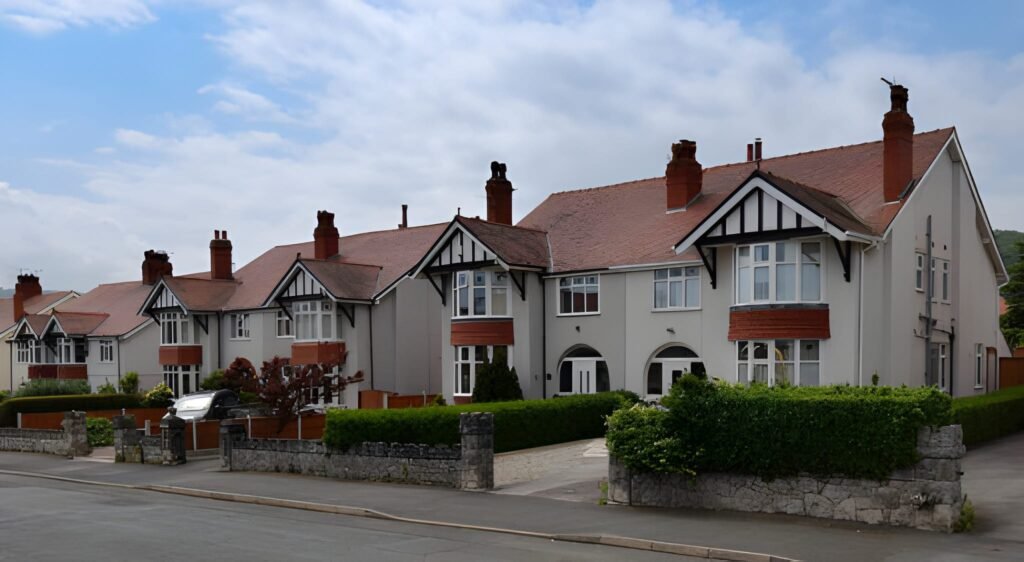
Acquiring a second property in Wales places you within a distinctly rigorous tax environment, arguably the most stringent in the United Kingdom. The Welsh Government has implemented a clear policy to disincentivise second home ownership and free up housing stock for local communities. This policy is enacted through a unique property tax system and powerful fiscal levers that impose significant upfront and recurring costs on the owners of additional properties.
The Upfront Cost: Land Transaction Tax (LTT) and the Higher Rates
Wales replaced Stamp Duty Land Tax (SDLT) with its own tax, Land Transaction Tax (LTT). The system for second properties is similar in principle to England’s but uses different thresholds and rates.
The Higher Rates for Additional Properties
When you purchase a second residential property in Wales (and you will own more than one upon completion), you must pay the higher LTT rates. These apply to the entire purchase price.
The main and higher rates for residential property in Wales are:
| Purchase Price Band | Main Residence LTT Rate | Second Property LTT Rate |
|---|---|---|
| Up to £225,000 | 0% | 4% |
| £225,001 to £400,000 | 6% | 7.5% |
| £400,001 to £750,000 | 7.5% | 10% |
| £750,001 to £1.5m | 10% | 12% |
| Over £1.5m | 12% | 14% |
Illustrative Calculation:
For a second property purchased for £400,000, the LTT is calculated as follows:
For comparison, if this were a main residence, the LTT would be (text{£225,000} times 0.00) + (text{£175,000} times 0.06) = text{£10,500}. The higher rates add £11,625 to the tax bill.
Reclaiming the Higher Rates: As in England, if you buy a new property before selling your old main residence, you must pay the higher rates upfront. You can reclaim this additional amount if you sell your previous main residence within 36 months.
The Annual Liability: Council Tax and the Premium
This is where Wales’s policy is most assertive. The Welsh Government has empowered local authorities to levy a substantial premium on second homes and long-term empty properties.
- The Council Tax Premium: Local councils in Wales have the discretion to charge a premium of up to 300% on top of the standard Council Tax bill for second homes. This is not a hypothetical power; many councils in high-tourism areas like Gwynedd, Pembrokeshire, and Snowdonia have implemented the full 300% charge.
- Financial Impact: This transforms the annual cost of ownership. A property with a standard Council Tax bill of £2,000 would incur an annual bill of £8,000 where the full 300% premium is applied (text{£2,000} + (text{£2,000} times 3.00) = text{£8,000}).
Other Key Tax Considerations
- Capital Gains Tax (CGT): As in the rest of the UK, a second property in Wales does not qualify for Private Residence Relief. When you sell, you will be liable for CGT on the profit. The rates are 18% for basic-rate taxpayers and 28% for higher-rate taxpayers.
- Income Tax: If you rent out the property, the rental income is subject to Income Tax. Mortgage interest tax relief is restricted to a 20% tax credit for individual landlords.
- Furnished Holiday Lettings (FHL): If the property meets the specific criteria to be classified as an FHL, it falls under a different, often more favourable, tax regime. This allows for full deductibility of mortgage interest and potential eligibility for Business Asset Disposal Relief (10% CGT). However, the property must be available for let for 210 days and actually let for 105 days per year.
The Planning Law Change: A New Hurdle
Beyond taxation, a significant legal change came into effect in 2022. To convert a primary residence into a second home or a short-term holiday let in many areas of Wales, you now require planning permission. This gives local authorities a powerful tool to control the number of second homes in their communities, adding a layer of regulatory complexity beyond pure fiscal cost.
Summary of Liabilities
| Tax Type | Liability for a Second Property in Wales | Key Note |
|---|---|---|
| Land Transaction Tax (LTT) | Higher Rates (4% – 14%) | Payable on purchase; can be reclaimed if replacing a main residence sold within 36 months. |
| Council Tax | Standard rate + up to 300% premium | Set by the local council; the 300% premium is a reality in many areas. |
| Capital Gains Tax (CGT) | 18% or 28% on the profit | Payable on sale; no main residence relief. |
| Income Tax | Applied to rental income at your marginal rate | Mortgage interest relief is restricted for individual landlords. |
In conclusion, owning a second property in Wales is a commitment that is heavily penalised by the tax system and increasingly restricted by planning law. The combination of high upfront LTT and the potential for a crushing 300% Council Tax premium creates a financial burden that fundamentally alters the investment calculation. Before purchasing, it is imperative to check the specific Council Tax premium with the local authority and factor in the significant ongoing costs. For any prospective buyer, seeking professional advice from a Welsh property tax specialist is not just recommended; it is essential to understand the full and substantial cost of ownership.