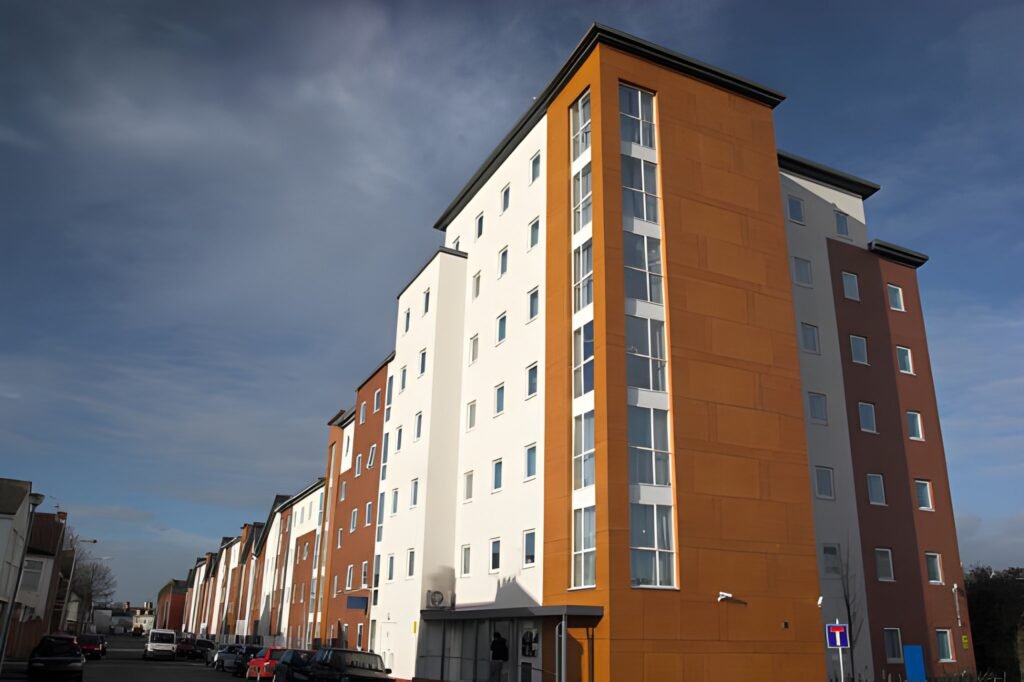
House in Multiple Occupation (HMO) accommodation represents a distinct and vital segment of the UK’s private rented sector, providing shared living solutions for a diverse demographic. It is defined not just by its physical layout but by a unique set of economic drivers, tenant profiles, and a rigorous regulatory framework. Understanding HMO accommodation requires moving beyond the basic definition to explore its operational realities, its appeal, and its challenges.
The Defining Characteristics of HMO Accommodation
At its core, HMO accommodation is any residential property where three or more tenants, forming two or more separate households, share basic amenities like a kitchen or bathroom. The most regulated category—the licensable HMO—is occupied by five or more people in this arrangement.
The physical manifestation is typically a house or a large flat converted to let individual rooms. The key features are:
- Individual Bedrooms: Each tenant has a private lockable room, which is the core of their tenancy.
- Shared Common Areas: Tenants have shared, non-exclusive access to kitchens, living rooms, bathrooms, and hallways.
- Centralised Services: Utilities like water, sewerage, and council tax are often included in the rent, as they are a single supply to the property, though energy and broadband may be split among tenants.
The Tenant Demographics and Market Drivers
HMO accommodation serves a specific and growing market, driven by economic necessity and lifestyle choice.
- The Core Tenant Base:
- Students: The traditional HMO market, seeking affordable housing near universities.
- Young Professionals: Graduates and workers in their early careers, often in cities like London, Manchester, or Bristol, where renting a whole property is prohibitively expensive.
- Key Workers: Nurses, teachers, and emergency service personnel who may be priced out of the rental markets in the areas they serve.
- Transient Workers: Individuals on short-term contracts who need flexible, furnished accommodation without long-term commitments.
- The Driver: Affordability. The primary appeal is financial. A tenant can rent a room in a desirable location for a fraction of the cost of a one-bedroom flat. For example, a room in a well-located London HMO might cost £700-£900 pcm, while a studio flat in the same area could be £1,400+ pcm.
The Landlord’s Perspective: The Yield vs. Compliance Equation
For landlords and investors, HMO accommodation is a business model built on high yield but demanding high engagement.
The Financial Incentive:
The model is based on the “room-by-room” yield, which is almost always higher than letting a property as a single unit.
- Standard Let Example: A 4-bed house in a regional city might achieve £1,200 pcm as a whole property.
- HMO Let Example: The same property, let as four individual rooms at £425 pcm each, generates £1,700 pcm.
- The gross annual income jumps from £14,400 to £20,400, a significant increase that justifies the higher management input.
The Compliance Burden:
This higher income is counterbalanced by stringent legal responsibilities. For licensable HMOs, these include:
- Licensing: Securing a mandatory HMO licence from the local council, involving a fee and a ‘fit and proper person’ test.
- Safety Standards: Meeting exacting fire safety rules (e.g., interlinked fire alarms, fire doors), providing minimum room sizes (6.51 sqm for a single adult), and ensuring adequate facilities (e.g., one bathroom per five people).
- Management Intensity: Dealing with higher tenant turnover, managing shared space conflicts, and conducting more frequent inspections and maintenance.
The Tenant Experience: Community vs. Conflict
Living in HMO accommodation is a specific lifestyle with distinct advantages and drawbacks.
- Advantages:
- Affordability and Location: Access to cheaper rent in often prime locations.
- Fully Furnished and Equipped: Rooms are typically let furnished, with shared appliances provided.
- Social Aspect: For some, the built-in community can alleviate loneliness and provide a ready-made social network.
- Bills Often Included: Simplifies budgeting, as major bills are frequently part of the rental payment.
- Disadvantages:
- Lack of Privacy: The need to share kitchens and bathrooms can lead to friction.
- Dependence on Housemates: A tenant’s quality of life is heavily influenced by the behaviour and cleanliness of others.
- Potential for Disputes: Conflicts over cleaning, noise, guests, and shared food are common.
- Smaller Personal Space: The private living area is confined to a single bedroom.
The Regulatory Landscape and Quality Spectrum
The quality of HMO accommodation exists on a wide spectrum, heavily influenced by local council enforcement. At one end are professionally managed, high-specification properties that exceed legal standards. At the other are poorly maintained “slum” HMOs, often operated by rogue landlords seeking to maximize profit by ignoring safety rules and cramming in tenants.
The regulatory framework, particularly mandatory licensing, is designed to eradicate the latter by enforcing minimum standards for safety, space, and management. Tenants are increasingly protected by rights to claim rent back via Rent Repayment Orders if a landlord operates an unlicensed HMO.
In conclusion, HMO accommodation is a complex, dual-natured sector. It is an essential source of affordable housing for millions, enabling city living for key demographic groups. Simultaneously, it is a high-maintenance, specialist asset class for landlords that demands a professional and compliant approach. Its future is likely to involve even tighter regulation and a continued shift towards professional management, as councils and the government seek to ensure that this critical part of the housing market is both safe and sustainable.