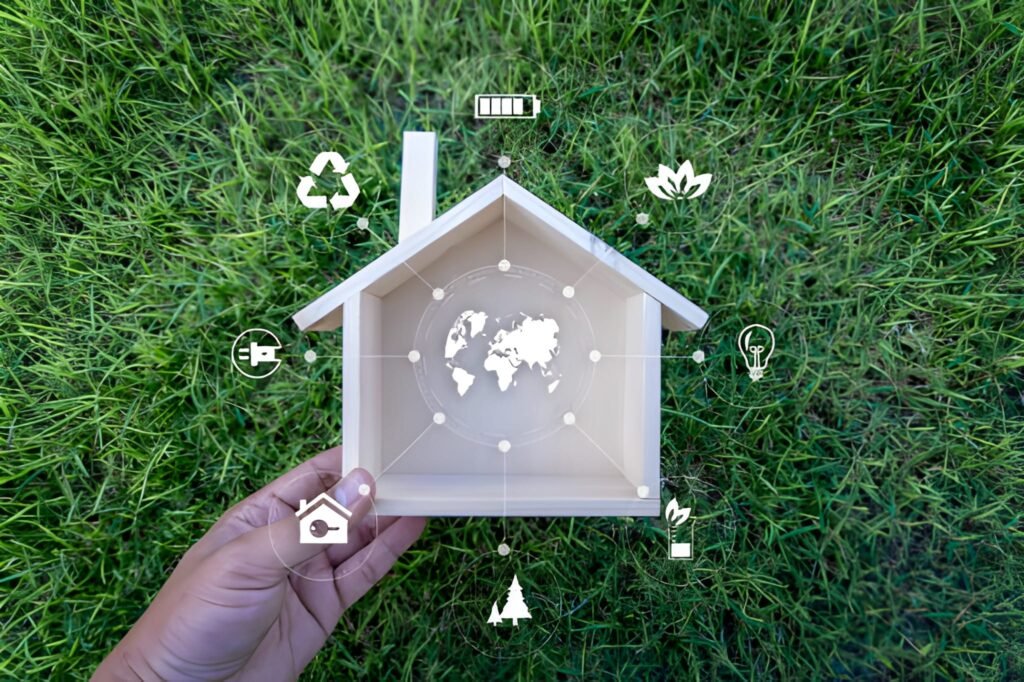
Transforming your house into a sustainable home can feel like a daunting project. The key to success lies in avoiding overwhelm and focusing on a sequence of high-impact, manageable actions. This five-step plan provides a logical pathway that builds from simple behavioural changes to more substantial upgrades, ensuring each action sets the stage for the next. This methodical approach creates a cumulative effect, leading to significant reductions in your energy bills, carbon footprint, and waste.
Step 1: Eliminate Energy Vampires and Master Your Thermostat
The first and most immediate step costs nothing but attention. It is about reclaiming control over the energy you already use and stopping waste at its source.
- Hunt Phantom Loads: A significant amount of electricity is consumed by devices on standby—televisions, game consoles, computers, chargers, and coffee makers. This is “phantom load.” Conduct an audit by feeling for warm plugs or using an energy monitor. The simplest solution is to connect these devices to a power strip with a switch and turn it off when the appliances are not in use, especially overnight.
- Optimise Your Heating Schedule: Instead of cranking the thermostat for a quick blast of heat, program your boiler to provide a consistent, lower temperature. Lowering your thermostat by just 1°C can reduce your heating bill by up to 10%. Set it to come on earlier in the morning and turn off earlier in the evening, ensuring you are only heating your home when you are there to benefit from it.
These behavioural shifts require no financial investment but cultivate a mindset of awareness that is foundational for all the steps that follow.
Step 2: Seal the Envelope and Switch to LED
With your energy usage now under conscious control, the next step is to ensure the heat you pay for stays inside your home and that your lighting is as efficient as possible.
- Draught-Proof with Purpose: Feel for cold air leaks around windows, doors, letterboxes, and keyholes. Seal these gaps using self-adhesive foam tape for window seams and brush strips for the bottom of external doors. A simple, letterbox draught excluder and a keyhole cover can block surprising amounts of cold air. This is one of the most cost-effective measures you can take.
- The Complete LED Transition: Go through your home and replace every remaining halogen or compact fluorescent (CFL) bulb with Light Emitting Diodes (LEDs). A single LED bulb uses at least 75% less energy than a halogen equivalent and can last over 15 years. The payback period is swift, and the ongoing savings are substantial.
These low-cost upgrades act as a direct force multiplier for your efforts in Step 1, ensuring the energy you conscientiously use is not wasted.
Step 3: Insulate the Loft and Control Water
Now that the building envelope is tighter, address the two largest areas of unseen energy loss: heat rising through the roof and water being wasted.
- Top-Up Loft Insulation: Heat rises, and an under-insulated loft is a primary escape route. The recommended minimum depth is 270mm. If your insulation is below this, adding a top-up layer of roll or loose-fill insulation is a highly effective DIY-friendly project that pays for itself in a few seasons.
- Install Water-Efficient Devices: Fit aerators onto all your kitchen and bathroom taps. These small, mesh devices reduce flow by mixing in air, maintaining pressure while saving thousands of litres annually. Next, install a low-flow showerhead, which can cut water usage (and the energy needed to heat it) by half without compromising your shower experience.
This step tackles the fundamental physics of your home, conserving both thermal energy and water resources with lasting effect.
Step 4: Embrace Smart Technology and Green Power
With a more efficient physical structure, you can now introduce intelligence to automate savings and clean your energy supply.
- Install a Smart Thermostat: Systems like Nest, Hive, or Tado learn your schedule and can be controlled remotely. Their geofencing feature uses your phone’s location to turn off the heating when you leave and back on as you return, eliminating wasted heating in an empty house. They also provide detailed energy usage data, further refining your consumption.
- Switch to a 100% Green Energy Tariff: This is an administrative change with an immediate, massive impact on your carbon footprint. Choose a supplier that is certified to provide electricity from 100% renewable sources like wind and solar. This does not require new hardware; it shifts your demand to the green energy grid, driving further investment in renewables.
This step leverages technology to lock in your gains and ensure the energy you use is sourced sustainably.
Step 5: Invest in One Significant Upgrade
The final step is to consider one larger investment that will deliver long-term performance, building on the foundation of efficiency you have already established.
- The Obvious Candidate: Solar PV. Once you have reduced your energy demand through the previous steps, installing a solar photovoltaic (PV) system becomes a highly logical investment. A smaller, more affordable system can meet a larger portion of your now-reduced energy needs. Pairing it with a battery allows you to use your solar power in the evening, maximising independence from the grid.
- The Comfort Candidate: Upgrade Your Glazing. If your windows are old and draughty single-glazed or inefficient double-glazed units, upgrading to modern double or triple glazing is a transformative investment. It permanently improves thermal comfort, reduces external noise, and eliminates draughts at the source.
- The Foundation Candidate: Insulate Your Walls. For homes with cavity walls, having them filled with insulation is a highly effective one-time upgrade. For solid-wall homes (common in pre-1920s properties), this is a bigger project but offers the single biggest improvement to the building’s thermal performance.
By following this sequential plan, you avoid the common pitfall of installing solar panels on an inefficient, draughty home. Each step makes the next one more effective, creating a cohesive, intelligent system that results in a genuinely sustainable, comfortable, and cost-effective home.