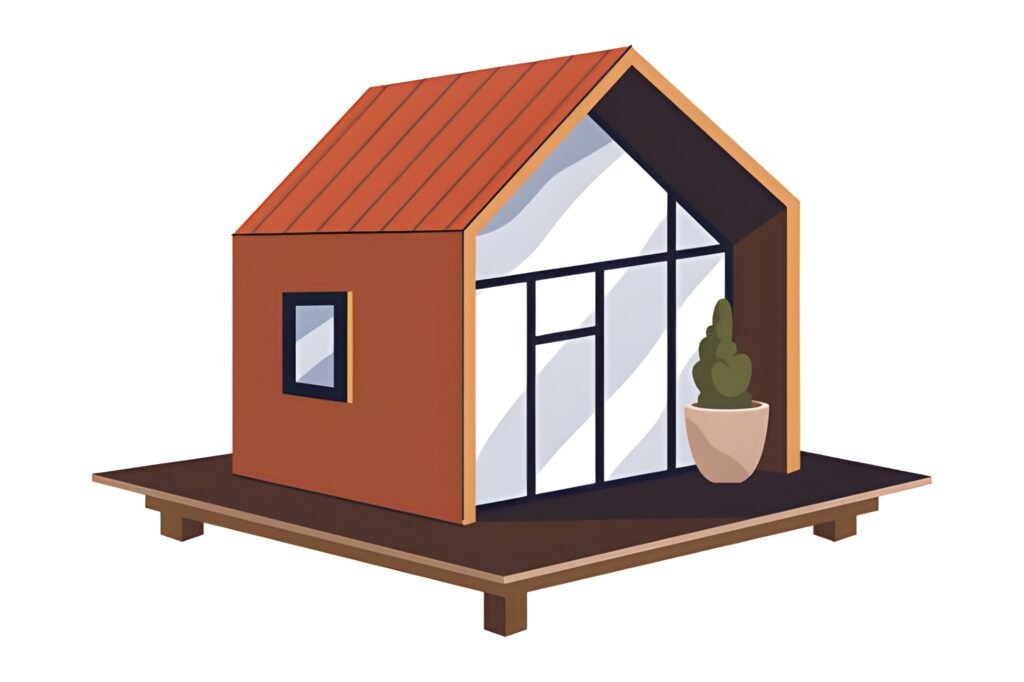
The image of a shipping container home often conjures stark, industrial aesthetics. Yet, when approached with ecological intelligence, these steel boxes transform into highly efficient, affordable, and surprisingly comfortable dwellings. For the UK, with its specific climate challenges and planning regulations, building with containers offers a unique path to a low-carbon lifestyle. This guide presents two distinct, fully-realised plans for a container eco-home, moving beyond concept to deliver actionable, detailed strategies for sustainable living.
Foundational Principles: The Philosophy of the Container Home
Before delving into the plans, it is critical to understand the core tenets that separate a truly eco-conscious container home from a simple novelty build.
The primary ecological advantage is the reuse of a surplus industrial asset. A single 40-foot shipping container represents over 3,500 kg of repurposed steel, saving the embodied energy of new construction materials. The structure itself is inherently strong, durable, and rapidly erected, reducing on-site construction time and disruption.
However, a raw steel box is a thermodynamic nightmare. It conducts heat with high efficiency, leading to condensation in cool climates and overheating in the sun. Therefore, every decision in these plans prioritises the “Fabric First” approach: creating a super-insulated, airtight envelope that turns the container’s weaknesses into strengths. We also embrace passive solar design, strategic glazing, and low-carbon systems to create a home that is not just built from a recycled object, but operates in a regenerative way.
Plan 1: The Compact Solo
- Concept: A highly efficient, single-storey residence for one or two people, designed on a modest footprint to minimise both cost and environmental impact. This plan prioritises simplicity, affordability, and a deep connection to the outdoors.
- Container Configuration: A single 40-foot High Cube container (12.19m x 2.44m x 2.89m) provides the core structure. A key move is to position it with the long axis running east-west, allowing for a full-height, fully glazed southern elevation.
- Structural Modification: The entire southern long wall is removed and replaced with a structural steel frame to support the glazing. The corrugated steel ceiling is lined but left exposed in parts for a sense of volume.
Layout and Spatial Design
The interior is a single, open-plan living space, cleverly zoned without full walls.
- Living/Kitchen Zone: The bright south-facing end is dedicated to living, dining, and kitchen functions. A compact, galley-style kitchen runs along the northern wall, equipped with space-saving, energy-efficient appliances.
- Sleeping/Bathroom Zone: The more private, northern end houses the bedroom area, separated by a floor-to-ceiling storage unit that acts as a room divider. Behind this, a fully enclosed wet room contains a shower, toilet, and basin. The use of pocket doors saves crucial space.
Eco-Performance and Building Physics
This is where the container is transformed into a high-performance home.
- Insulation Strategy: External Wall Insulation (EWI) is the only viable method. Applying insulation on the outside breaks the thermal bridge of the steel and protects the container from temperature swings. We specify 200mm of wood fibre board.
- Calculation: The U-value measures how quickly heat escapes. A standard container wall has a U-value of over 5.0 W/m²K. With 200mm of wood fibre (Lambda λ ≈ 0.038 W/mK), we achieve: \text{U-value} = \frac{1}{0.17 + \frac{0.2}{0.038} + 0.04} \approx 0.18\ \text{W/m}^2\text{K}. This surpasses UK Building Regulations and is comparable to a Passivhaus standard.
- Airtightness and Ventilation: All seams and cut openings are sealed with specialist airtightness tape and membranes. A small, single-room Mechanical Ventilation with Heat Recovery (MVHR) unit is installed, providing constant fresh, filtered air while recovering over 85% of the heat from the extracted stale air.
- Glazing: The large south-facing glazing is triple-glazed, with a U-value of 0.8 W/m²K and a high Solar Heat Gain Coefficient (SHGC) to capture passive solar energy in winter. A deep, fixed overhang is calculated to shade the glass from the high summer sun but allow the low winter sun to penetrate and warm the concrete floor slab.
- Heating: The minimal heat demand is met primarily by the passive solar gain and the MVHR. For backup, a small, low-wattage electric underfloor heating system is embedded in the polished concrete floor, which acts as a thermal mass, storing heat during the day and releasing it at night.
Plan 2: The Family Module
- Concept: A spacious, two-storey family home created from a simple yet dynamic arrangement of four containers. This plan focuses on flexibility, space, and maximising solar gain through a central, double-height atrium.
- Container Configuration: Two stacked 40-foot High Cube containers form the core living module on the north side. Two more containers are placed side-by-side on the ground floor to the south, creating a wide footprint. The key move is cutting away the entire first-floor deck of the southern containers to form a dramatic, light-filled double-height living space.
Layout and Spatial Design
The layout is organised around the central atrium, which functions as the heart of the home.
- Ground Floor: The southern containers form an expansive, open-plan kitchen, dining, and living area, flowing directly into the double-height atrium and out to the garden. The northern ground floor container contains a utility room, a home office/study, and the main entrance.
- First Floor: The two northern first-floor containers house the private spaces. One is dedicated as the master bedroom with an en-suite shower room. The other contains two children’s bedrooms and a family bathroom. A glazed bridge connects these two wings, overlooking the living space below, fostering visual connection and flooding the core with light.
Eco-Performance and Building Physics
The larger scale allows for more advanced systems.
- Insulation Strategy: Again, External Wall Insulation is critical. We use 250mm of wood fibre board for the walls and 300mm for the roof (created by the flat surface of the stacked containers). The U-value for the wall would be approximately: \text{U-value} = \frac{1}{0.17 + \frac{0.25}{0.038} + 0.04} \approx 0.15\ \text{W/m}^2\text{K}.
- Airtightness and Ventilation: A whole-house MVHR system is essential. The central unit, with ducting running through the service voids created by the internal wall linings, provides fresh air to all bedrooms and living spaces, extracting from wet rooms and the kitchen.
- Renewable Energy Systems:
- Solar PV: The large, flat, south-facing roof is ideal for a 4 kWp solar panel array. With a battery storage system, this can cover a significant portion of the home’s electricity needs. A typical UK 4 kWp system might generate \text{Annual Generation} = 4\ \text{kWp} \times 850\ \text{kWh/kWp} = 3,400\ \text{kWh}.
- Heating: An Air Source Heat Pump (ASHP) is the perfect solution. Its low-temperature output is ideal for the underfloor heating on both floors. The system’s efficiency, or Coefficient of Performance (COP), means for every 1 kWh of electricity it uses, it generates 3-4 kWh of heat.
Comparative Analysis: Key Specifications
| Feature | Plan 1: The Compact Solo | Plan 2: The Family Module |
|---|---|---|
| Containers Used | 1 x 40ft HC | 4 x 40ft HC |
| Approx. Floor Area | 28 m² | 140 m² |
| Key Insulation | 200mm Wood Fibre (EWI) | 250mm Wood Fibre (EWI) |
| Target U-Value | 0.18 W/m²K | 0.15 W/m²K |
| Primary Heating | Electric UFH + Passive Solar | Air Source Heat Pump + UFH |
| Ventilation | Single-Room MVHR | Whole-House MVHR |
| Renewables | Optional small solar PV | 4 kWp Solar PV + Battery |
| Estimated Build Cost | £75,000 – £110,000 | £220,000 – £350,000 |
Navigating the UK Context: Planning and Practicalities
Building a container home in the UK is feasible but requires careful navigation.
- Planning Permission: Container homes often fall under permitted development if they meet size and location criteria, but the unconventional nature can trigger a full planning application. The key is design quality. Submit detailed drawings that show the EWI and a pitched or green roof, demonstrating the building will be a well-integrated, permanent structure that enhances its setting.
- Building Regulations: You must comply fully with Part L (Conservation of Fuel and Power). The U-value calculations and airtightness testing detailed in these plans are designed to meet and exceed these standards. The structural engineer must certify the modifications, especially the cutting of large openings.
- Foundations: A simple concrete slab or screw piles are common, minimising groundworks and disruption.
- Budgeting: Beyond the containers themselves (typically £2,000-£4,000 each), the major costs are in the fabrication (cutting, welding), the high-performance insulation and glazing, and the internal fit-out. The mechanical systems (MVHR, ASHP) also represent a significant but worthwhile investment.
These two plans demonstrate that the shipping container eco-home is not a single idea but a flexible system. It can be a minimalist retreat or a spacious family residence. The constant is the rigorous application of ecological principles, transforming a symbol of global industry into a quiet, efficient, and deeply personal sanctuary.